By Sarah Donnelly · Published 12 November 2026 · 3 min read
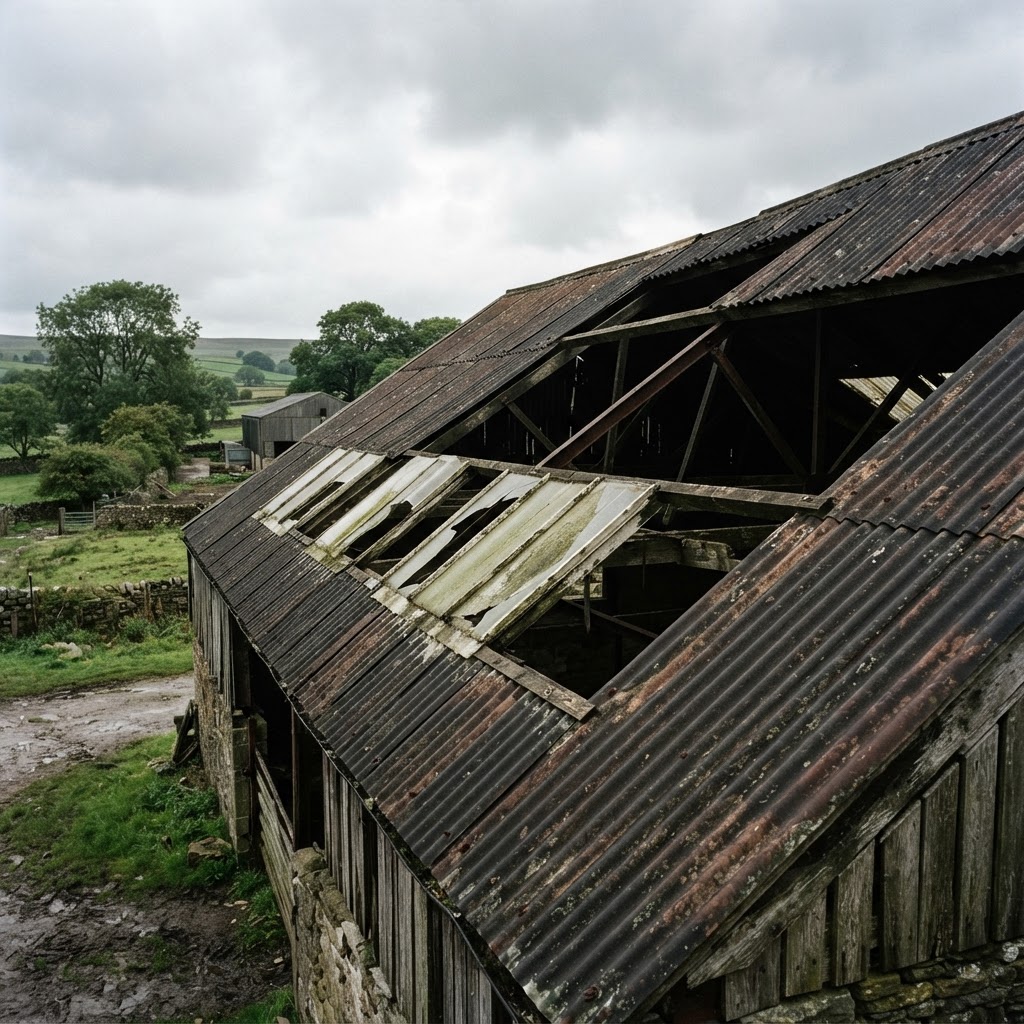
A Lancashire construction and landscaping firm has been fined £20,000 after a worker suffered multiple fractures falling through a fragile barn roof. AJ Riley Landscapes and Building Limited failed to provide adequate control measures or training for the roof replacement project. The prosecution at Warrington Magistrates' Court on 3 November 2026 serves as a stark warning to contractors undertaking agricultural or industrial roof repairs.
Background
The incident took place on 24 February 2025 at Marl House Farm in Abbeystead. Josh Huddleston, 47, was replacing a damaged skylight when he fell approximately 10 metres through the fragile roof structure. He sustained severe injuries, including fractures to his ribs, vertebrae and pelvis. The subsequent HSE investigation found that AJ Riley Landscapes and Building Limited had failed to adequately plan the work. The company also failed to ensure appropriate control measures were in place to prevent falls through the fragile surface.
Industry implications
Working on fragile roofs remains one of the most high-risk activities in the construction sector. AJ Riley Landscapes and Building Limited pleaded guilty to breaching Section 2(1) of the Health and Safety at Work Act 1974. The firm was fined £20,000 and ordered to pay £4,955 in costs. The HSE investigation highlighted a critical gap between written risk assessments and actual site practice. Workers had not received sufficient training to ensure they were competent in using the control measures that the company had identified on paper.
What contractors should do now
Contractors must assume all agricultural and industrial roofing is fragile unless confirmed otherwise by a competent person. Before starting any roof work, firms must implement a strict hierarchy of control measures. This includes using mobile elevating work platforms (MEWPs) to avoid accessing the roof entirely where possible. If roof access is unavoidable, contractors must install staging, edge protection and safety nets installed by qualified riggers. Employers must also verify that all operatives have received specific, documented training on fragile roof hazards.
Analysis
This case illustrates a common compliance failure where companies draft risk assessments but fail to train their workforce on executing them. HSE inspector Matthew Shepherd noted that falls from height remain one of the leading causes of workplace fatalities. The regulator's decision to prosecute demonstrates zero tolerance for contractors who treat risk assessments as a mere paperwork exercise rather than a practical site manual.
What happens next
The HSE will maintain its strict enforcement stance on fragile roof work, particularly in the agricultural and industrial refurbishment sectors. Contractors should expect visiting inspectors to demand immediate proof of operative training and to halt work if physical fall prevention measures are absent. Companies planning winter maintenance on farm buildings must review their safe systems of work immediately.
Sources
- HSE Media Centre — Health and Safety Executive
- Lancaster Guardian — National World Publishing