By James Whitaker · Published 24 June 2026 · 3 min read
Two construction companies have been fined a combined £32,333 after a 60-year-old drilling operative sustained life-changing neck and back fractures. The severe injuries occurred when a temporary platform collapsed during a complex refurbishment project in the City of London. The worker described being folded up like a concertina under the weight of the debris. He has been unable to return to work since the incident.
Background
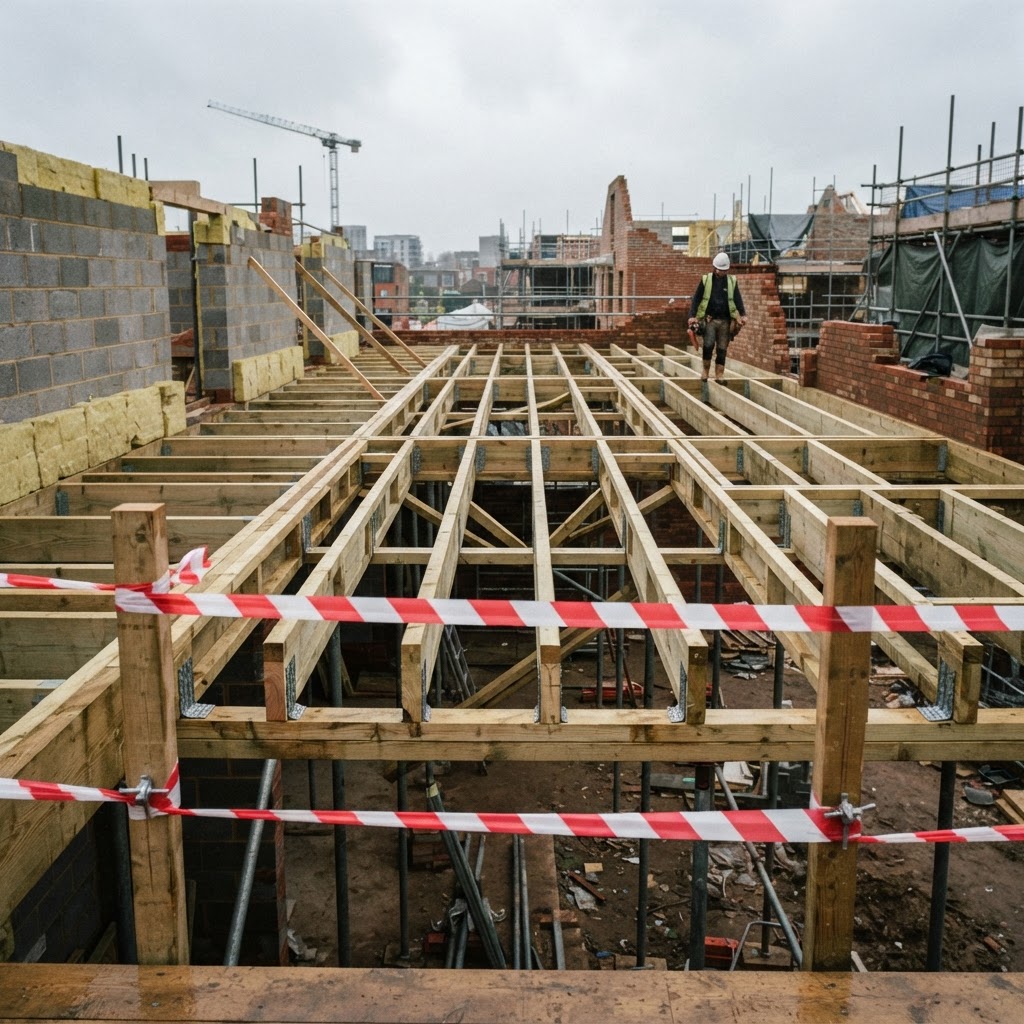
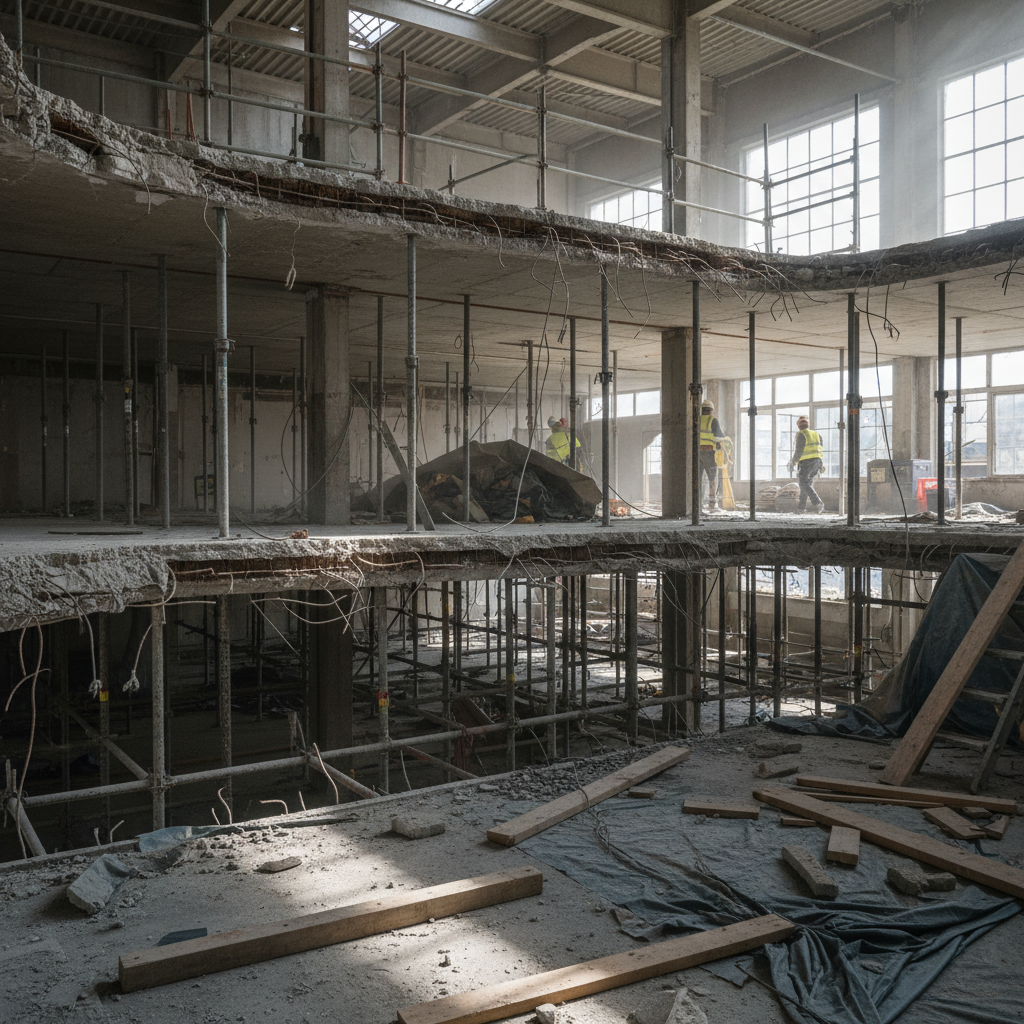
On 23 February 2024, Steve Zschoch was working for specialist subcontractor Diacutt Limited at a commercial site known as Paxton House. The principal contractor, Roots Contractors Limited, was overseeing a major internal overhaul. The specific task involved cutting large openings through five concrete floors to create a new service riser shaft. To facilitate this, a temporary wooden platform was installed to catch falling material. However, this platform became heavily loaded with dense concrete debris. It eventually gave way, collapsing directly onto the operative working below. The emergency services were called to extract the injured man from the rubble.
Industry implications
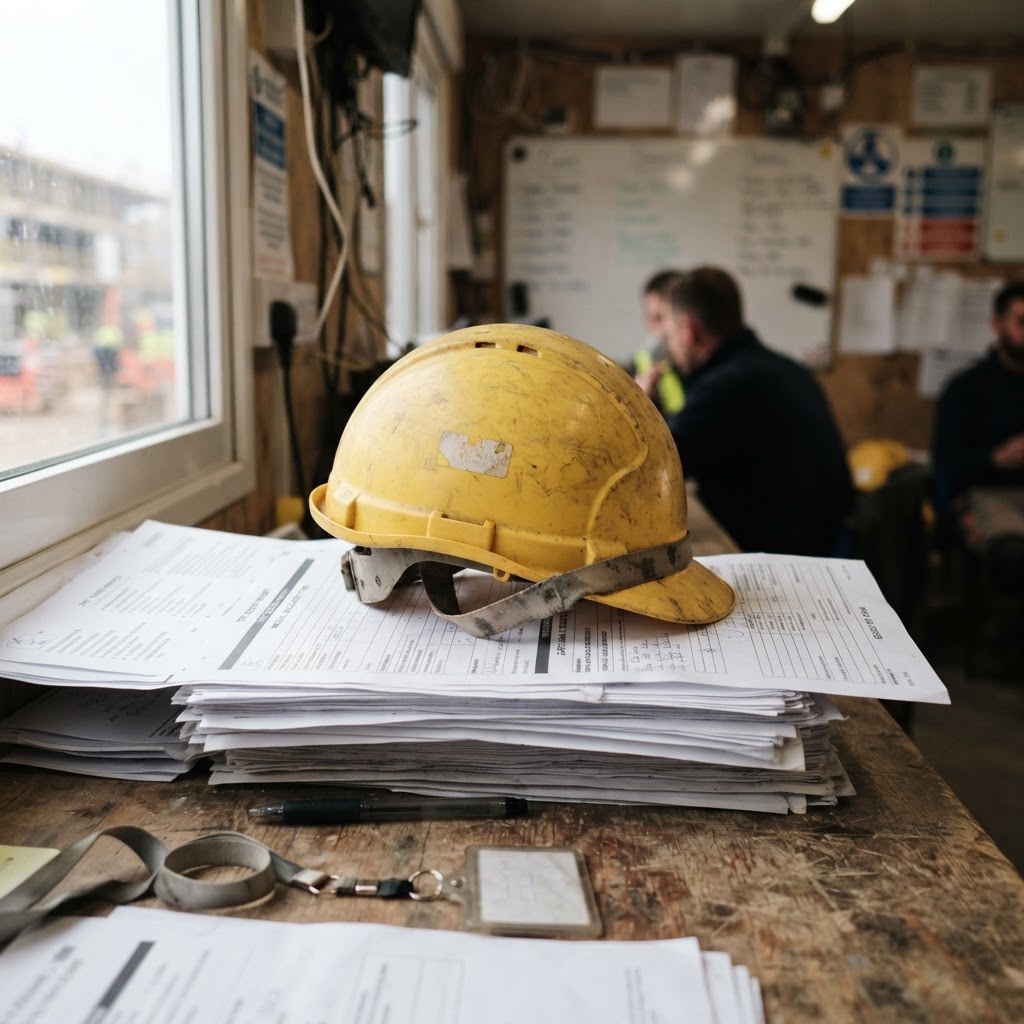
The Health and Safety Executive investigation exposed systemic procedural failures regarding the management of temporary works. Inspectors discovered there was no formal engineering design for the wooden platforms. Crucially, no mathematical calculation had been made to determine the safe level of structural loading. Although a daily inspection form for the platform was being completed on site, it failed to identify any foundational issues with the design. Furthermore, the individual tasked with completing this daily check was not a formally trained or competent temporary works coordinator. Site managers had issued a verbal instruction for workers to regularly clear the platforms of concrete. They were told not to overload the timber structures. However, because no safe maximum load was ever calculated, workers had no objective way to measure what constituted an overload. There was also no formal monitoring system to ensure the platforms were actually being cleared as instructed.
What contractors should do now
Principal contractors must ensure all temporary structures are formally designed by a qualified structural engineer. Safe loading limits must be calculated in writing, documented in the construction phase plan, and clearly displayed on the physical platform. Site management must appoint a designated temporary works coordinator who holds verifiable, industry-recognised credentials. This coordinator must personally sign off on the initial erection and conduct weekly statutory inspections. Subcontractors must refuse to commence work near temporary structures if they have not seen documented proof of load capacity. Verbal instructions regarding site safety and debris clearing must be replaced with written, enforceable protocols.
Analysis
This prosecution exposes a dangerous blind spot in inner-city refurbishment projects. Temporary works are too often treated informally by site teams. Relying on casual visual checks instead of strict load calculations creates extreme physical risk for operatives. The assumption that a standard wooden platform can hold dense concrete rubble without engineered reinforcement is a lethal miscalculation. According to HSE inspector Lucy Ellison-Dunn, the guidance is absolutely clear that temporary structures must be designed, installed and maintained to withstand any foreseeable loads. The regulator continues to target sites where basic temporary works management is sidelined for the sake of speed.
What happens next
Roots Contractors Limited, based in Ewell, pleaded guilty to breaching Regulation 16(2) of the Construction (Design and Management) Regulations 2015. The firm received a £19,333 fine and was ordered to pay £5,548 in costs at Westminster Magistrates Court on 11 June 2026. Diacutt Limited of Croydon pleaded guilty to breaching Regulation 15(2) of the same legislation. They were handed a £13,000 fine and £5,548 in costs at the identical hearing. Enforcement officers are expected to increase unannounced site inspections focusing specifically on temporary works coordination throughout the summer months. Contractors should review their temporary works registers immediately to ensure full compliance before their next regulatory visit.
Sources
- Health and Safety Executive — UK Government