By Sarah Donnelly · Published 29 June 2026 · 2 min read
HS2 Joint Venture Fined £400,000 After 20-Tonne Tipper Truck Plunges Off Ramp
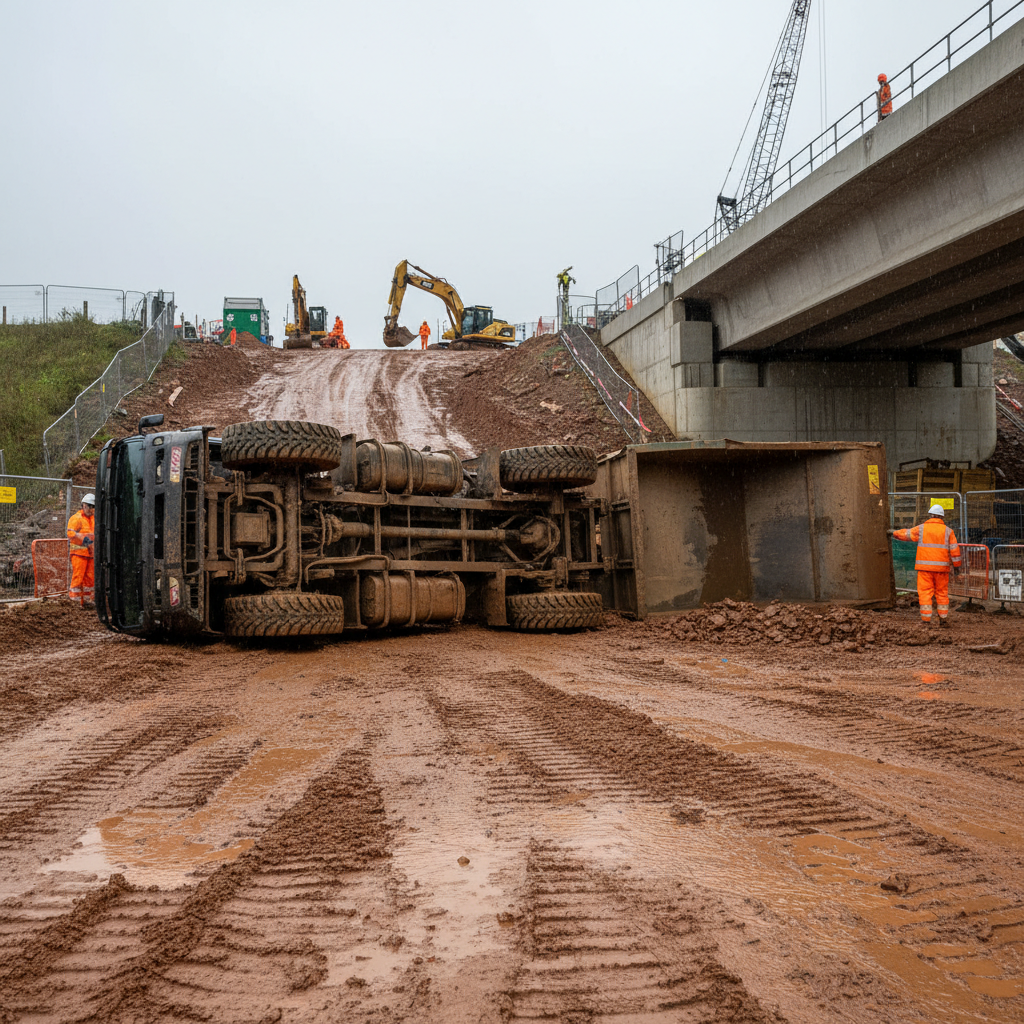
SCS Railways, the joint venture building the London tunnels for HS2, has been fined 400,000 pounds after a 20-tonne tipper truck fell from an unprotected excavation edge. The driver sustained a broken nose, a cut hand and a shoulder injury when the vehicle plummeted two metres and landed on its side at the Copthall North site near Uxbridge.
Background
The incident took place on 27 July 2021 during major earthworks. An HSE investigation revealed a complete absence of physical barriers or safety banks at the edge of the excavation. Furthermore, inspectors found no signage on the haulage routes used by the heavy plant. SCS Railways is a consortium comprising major contractors Skanska Construction UK Limited, Costain Limited and Strabag AG.
Industry implications
The prosecution proves that top-tier contractors on infrastructure projects are not immune to basic site management failures. Haul roads are legally classed as temporary works under CDM 2015. The joint venture pleaded guilty to contravening Section 3(1) of the Health and Safety at Work etc. Act 1974. They were fined 400,000 pounds and ordered to pay 8,974 pounds in costs at Uxbridge Magistrates Court on 16 June 2026.
What contractors should do now
Principal contractors must review all temporary haul roads and excavation ramps. Physical edge protection, such as earth bunds or safety banks, must be installed and maintained wherever heavy plant operates near drops. Vehicle movement plans should be clearly communicated with highly visible signage.
Analysis
HSE Inspector Gordon Carson stated that the incident was entirely preventable had the edges been properly protected. The size of the fine reflects the high culpability and the potential for a fatal outcome. It serves as a stark reminder that plant segregation and edge protection require daily monitoring, not just initial design approval.
What happens next
The HSE continues to target workplace transport and temporary works on major infrastructure sites. Joint ventures will face collective regulatory action where site-wide health and safety management systems fail to protect operators.
Sources