By James Whitaker · Published 18 October 2026 · 3 min read
The Building Safety Regulator has updated its statutory guidance on staged building control applications for higher-risk buildings. The revised framework expands eligibility to single tower projects while strictly defining the commencement stages required before construction can proceed. According to the regulator, developers must secure approval for specific structural milestones before advancing to subsequent phases.
Background
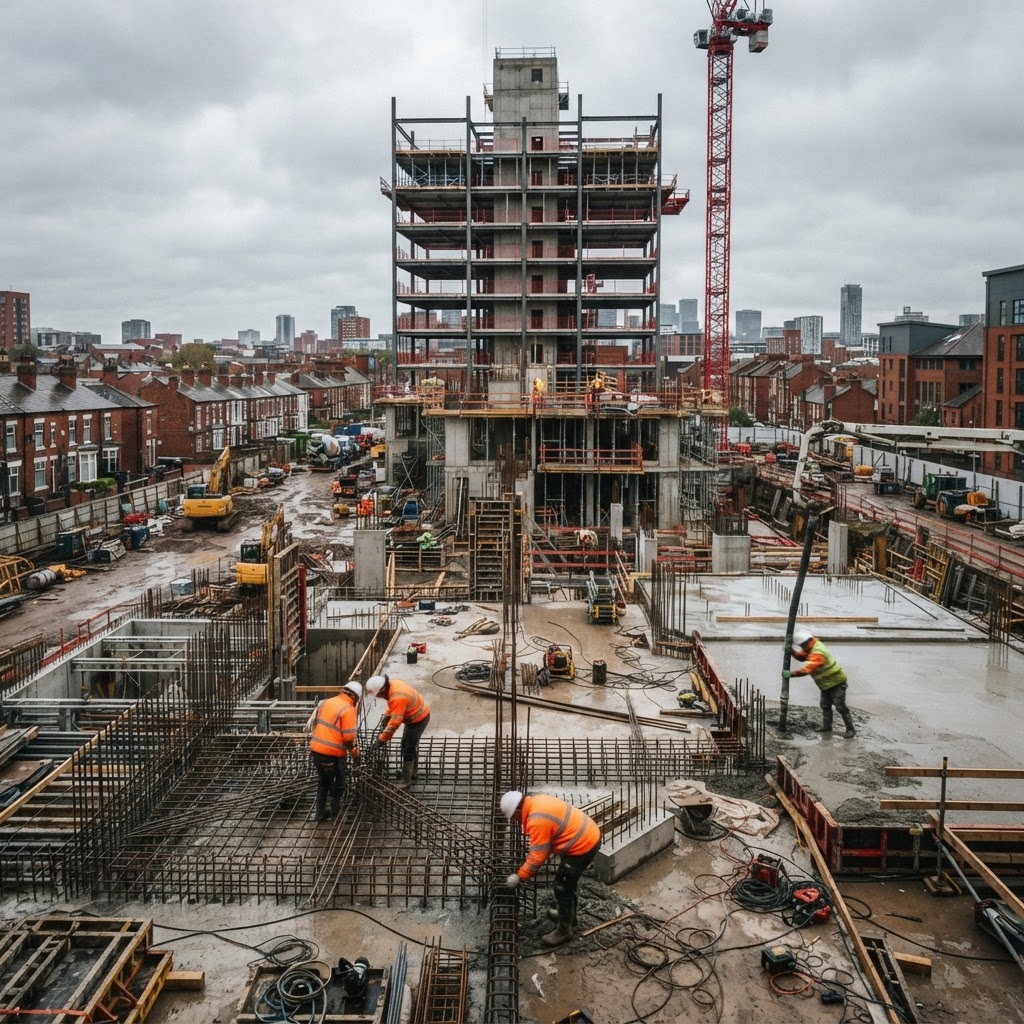
The Building Safety Act introduced a stringent gateway regime for higher-risk buildings to prevent a repeat of past tragedies. Previously, staged applications were primarily associated with complex multiple tower developments. The updated GOV.UK guidance clarifies that for single towers, stage one must include the completion of foundations and the ground floor structure. Developers of multiple tower projects are still required to contact the BSR for advice before submitting applications. The Construction Leadership Council has simultaneously published aligned guidance focusing on the critical steps between Gateways 2 and 3.
Industry implications
This regulatory shift means contractors and developers must adjust their project timelines and cash flow projections. Strict rules prohibit starting any work until the relevant staged application is approved by the authority. Submitting detailed documentation is now a strict legal requirement. The BSR has explicitly stated that applications will be rejected if they clearly demonstrate material non-compliance or contain information gaps that prevent a full assessment. This will likely increase upfront design costs and require earlier engagement with structural engineers and architects.
What contractors should do now
Firms must review their current design and build schedules for any higher-risk buildings in the pipeline. Project managers need to ensure that stage one foundation and ground floor structural designs are fully detailed before submission. Teams should also consult the newly published Construction Leadership Council guidance on maintaining the golden thread of information. Principal contractors must verify that their supply chain is prepared to provide progressive assurance documentation throughout the build phase.
Analysis
The BSR is clearly moving to close loopholes in the Gateway process. By detailing the Approval with Requirements process, the regulator is allowing designs that demonstrate substantive compliance to proceed, even if non-critical details are submitted later. However, the explicit grounds for rejection show a zero-tolerance approach to incomplete submissions. This dual approach suggests the BSR is attempting to balance rigorous safety oversight with the commercial realities of complex construction sequencing. The emphasis on substantive compliance places the burden of proof firmly on the applicant.
What happens next
The BSR will continue to monitor building control approval applications, with performance data against statutory time limits expected in the next quarter. Contractors should anticipate increased scrutiny on site as the regulator enforces these strict commencement definitions. Industry bodies are expected to release further technical briefings in the coming weeks to help members adapt to the expanded eligibility criteria for single tower projects. Developers planning new high-rise residential buildings must factor these extended approval timelines into their initial feasibility studies.
Sources