By James Whitaker · Published 19 October 2026 · 3 min read
The Health and Safety Executive has identified 166 kitchen worktop fabricators breaking the law regarding engineered quartz safety. Inspectors found widespread failures to control respirable crystalline silica dust, leading to multiple enforcement notices across the sector. The regulator has warned that failure to comply with these improvement notices is a criminal offence.
Background
Engineered quartz has surged in popularity for domestic kitchens over the last decade. While inert once installed, cutting and shaping the material releases high levels of respirable crystalline silica. The HSE recently banned dry cutting of engineered stone and mandated electric respirators and regular health screening for workers. Australia has already banned engineered quartz entirely due to the severe health risks, and California is preparing to implement similar restrictions.
Industry implications
The inspection regime revealed a mixed picture of compliance across the UK. Harvey Wild, HSE head of operations, confirmed that non-compliant firms are receiving multiple notices. Responsible fabricators report being undercut by rogue operators who ignore safety rules to offer products at significantly lower prices. Sam Hotten, owner of Stone Sense, noted that competitors who dry cut can sell worktops for £1,000 less, creating an uneven playing field for compliant businesses.
What contractors should do now
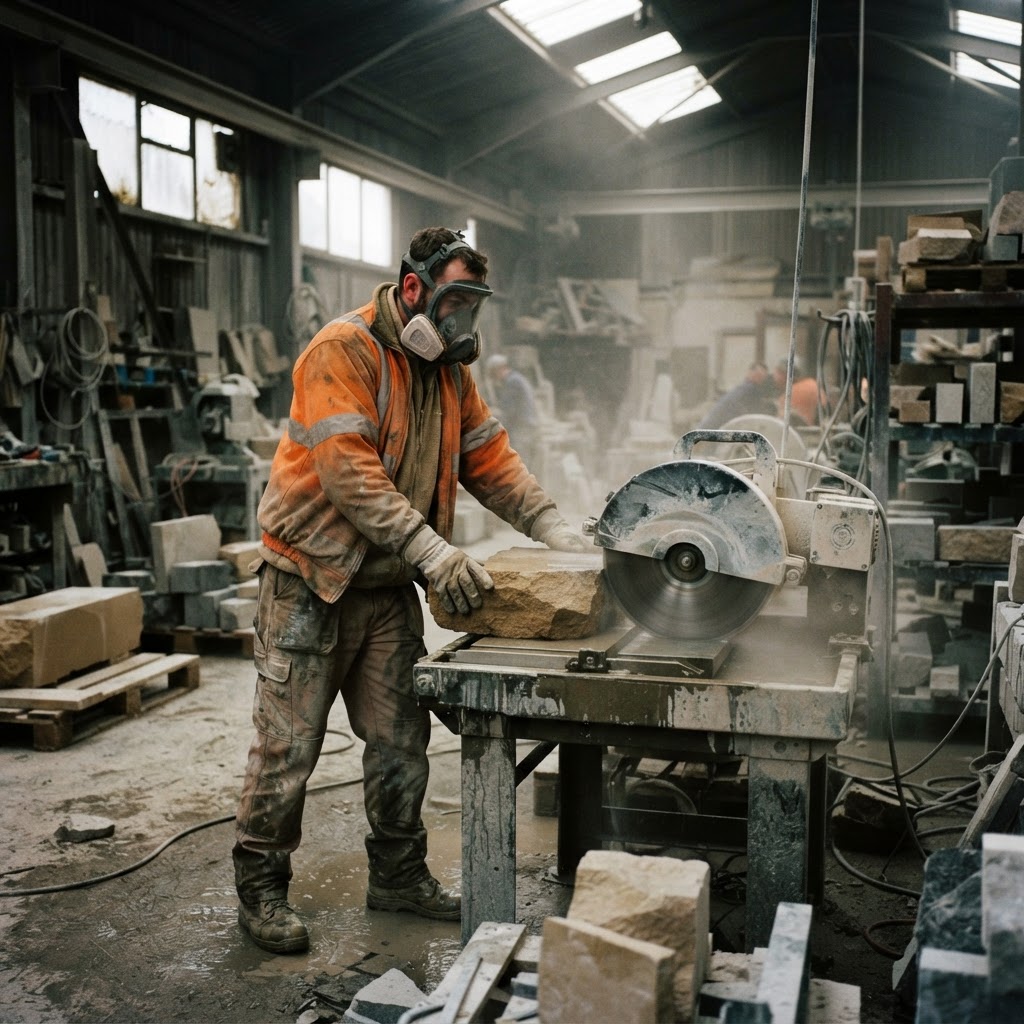
Employers must immediately cease all dry cutting of engineered stone. Wet cutting methods must be implemented alongside local exhaust ventilation. Workers must be provided with appropriate respiratory protective equipment and enrolled in health surveillance programmes. Site managers should review their risk assessments to ensure all control measures for respirable crystalline silica are actively enforced on the shop floor.
Expert view
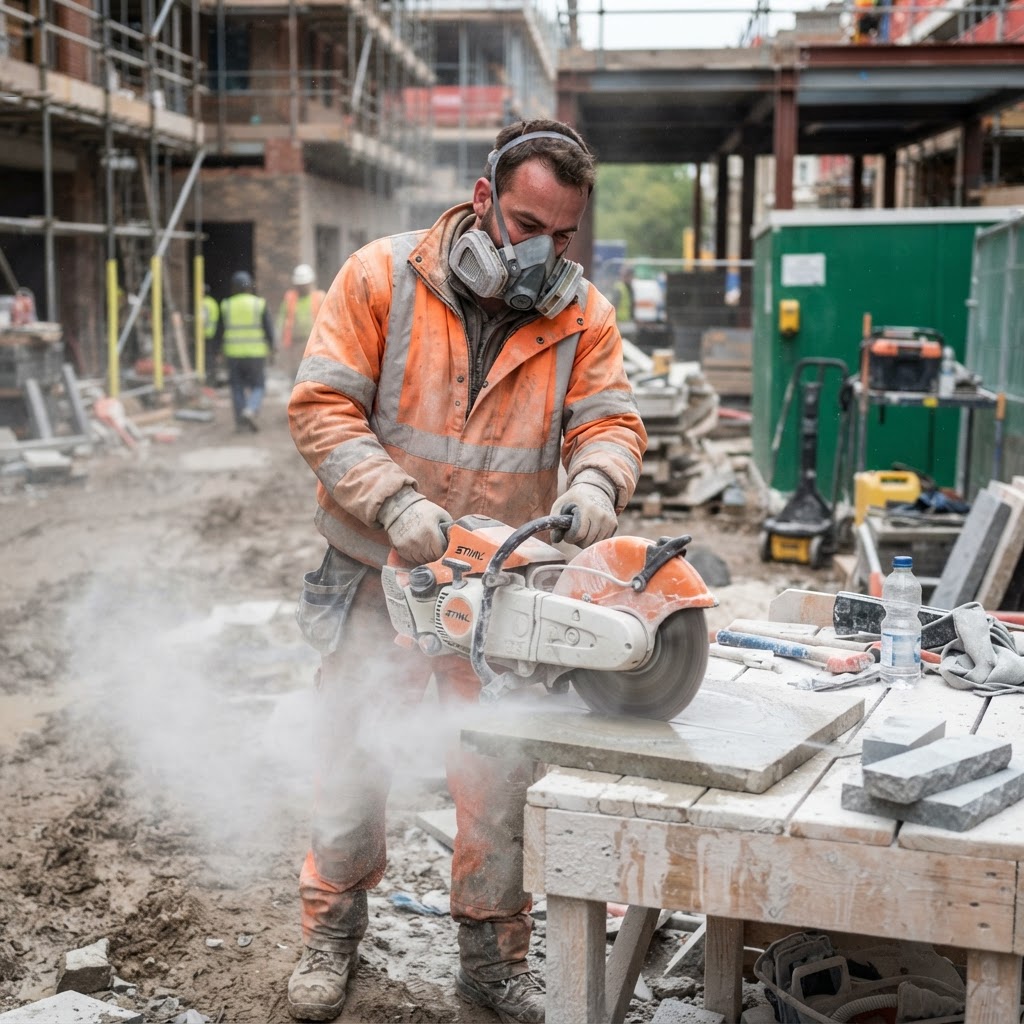
The enforcement action highlights a critical gap in occupational health management within the fabrication sector. Wild noted that inspectors found extreme poor practice, including one site in Central England where silica dust was billowing out of the doorway. The HSE immediately prohibited work at this site, where three employees were dry cutting and polishing with hand-held rotary tools. This level of exposure directly correlates with early mortality among workers.
What happens next
The HSE will continue its targeted inspection programme across the kitchen worktop industry. Trade bodies, including the Worktop Fabricators Federation, are advising consumers to question suppliers about factory conditions and material choices. Further enforcement action, including prosecutions and heavy fines, is expected for firms that fail to rectify identified breaches within the statutory timeframes.
Sources