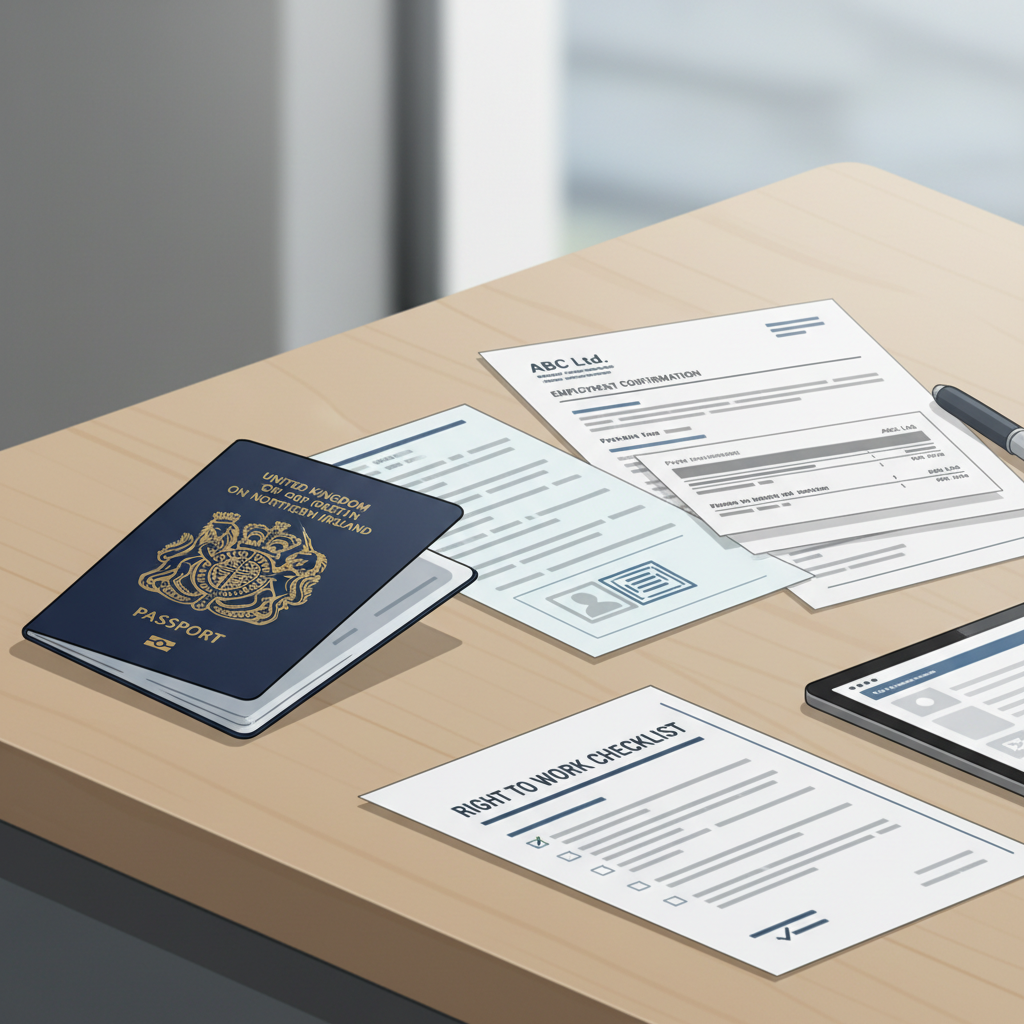
Right to Work checks are one of the most important steps in hiring, and one of the easiest to get wrong.
The UK has some of the strictest illegal working rules in Europe. Get it right and you have a complete defence against a civil penalty. Get it wrong and you can be fined up to 60,000 pounds per worker.
The rules apply to every employer, no matter how small the business. Even if you only employ one labourer or one apprentice, you must carry out a proper check before they start work.
What Is a Right to Work Check?
A Right to Work check is the process of verifying that someone has legal permission to work in the UK before you employ them.
There are three approved methods:
- A manual document check
- An online check using a Home Office share code
- A digital check through a certified Identity Service Provider (IDSP)
The right method depends on the person you are hiring and the documents they hold.
When Should the Check Happen?
Before the employee starts work. Not on day one. Not later that week. Before.
This is one of the most common mistakes small employers make. If someone starts work before the check is complete, you lose your statutory excuse and become liable for a civil penalty.
Manual Document Checks
Manual checks are used for British and Irish citizens, who can prove their right to work with a passport or other approved documents.
The process has three steps:
1. Obtain
Get the original documents from List A or List B published by the Home Office.
2. Check
Check the documents in the presence of the holder. Make sure:
- Photos look like the person
- Dates of birth match across documents
- Documents are genuine and unaltered
- Any expiry dates have not passed
- Names match, or there is evidence of name change
3. Copy and Record
Make a clear copy of the document. Record the date of the check. Keep both for the duration of employment plus two years.
Online Share Code Checks
Most non-UK and non-Irish workers will now use the Home Office online check service.
They give you a share code starting with the letter W. You enter it at gov.uk along with their date of birth.
The system will tell you:
- Whether they can work in the UK
- What restrictions apply (hours, type of work)
- The expiry date of their permission
Save or print the result. That is your statutory excuse.
Digital IDSP Checks
Since 2022, employers have been able to use a certified Identity Service Provider to carry out digital checks on British and Irish passport holders.
This is useful for remote hiring or for businesses that want a fully digital process. There is usually a small cost per check.
Follow-Up Checks
If the worker has time-limited permission, you must carry out a follow-up check before that permission expires.
Diary it the moment you complete the first check. Missing a follow-up is one of the most common ways employers lose their excuse.
What Records Should You Keep?
For every employee, you should keep:
- A copy of the document or online check
- The date the check was carried out
- The expiry date of any time-limited permission
- The follow-up date if needed
- The name of the person who carried out the check
Store them securely, in line with UK GDPR.
Penalties for Getting It Wrong
From February 2024, civil penalties for illegal working in the UK increased significantly:
- Up to 45,000 pounds per worker for a first breach
- Up to 60,000 pounds per worker for a repeat breach
In serious cases, employers can also face criminal prosecution and an unlimited fine.
Common Mistakes to Avoid
- Letting someone start work before the check is complete
- Accepting a copy or photo instead of seeing the original
- Not recording the date of the check
- Forgetting to do a follow-up check
- Treating EU citizens as if free movement still applies
- Carrying out checks only on workers who look or sound foreign, which is a discrimination risk
Final Thoughts
Right to Work checks are not complicated, but they need to be done properly and on time.
For a small construction or trades business, a simple checklist and a secure way to store records is usually enough. The key is consistency. Check every employee the same way. Keep clear records. Diary follow-up dates.
Do that, and you have a complete defence if the Home Office ever knocks on the door.