Personal Protective Equipment is one of those areas where a lot of small UK trade businesses get things subtly wrong. The boss buys a couple of pairs of gloves, expects the lads to bring their own boots, and assumes that ticks the box.
It does not.
UK PPE law was updated in April 2022 and the duties on employers are clearer and broader than ever.
What the Law Says
The key legislation is the Personal Protective Equipment at Work Regulations 1992, as amended by the Personal Protective Equipment at Work (Amendment) Regulations 2022 (often called PPER 2022).
The core duties are simple:
- PPE must be provided free of charge
- It must be suitable for the task
- It must fit the wearer properly
- It must be maintained, replaced and stored correctly
- Workers must be trained in how to use it
The 2022 amendment extended these duties so they apply not just to employees, but also to limb (b) workers, which includes most casual and zero-hours staff in the trades.
When Is PPE Required?
PPE should always be the last line of defence. The hierarchy of control under the Management of Health and Safety at Work Regulations 1999 puts elimination, substitution and engineering controls first.
For example, before issuing dust masks you should be looking at:
- On-tool extraction
- Water suppression
- Wet cutting
- Better ventilation
Only when the risk cannot be controlled by other means should you rely on PPE.
Common PPE in the Trades
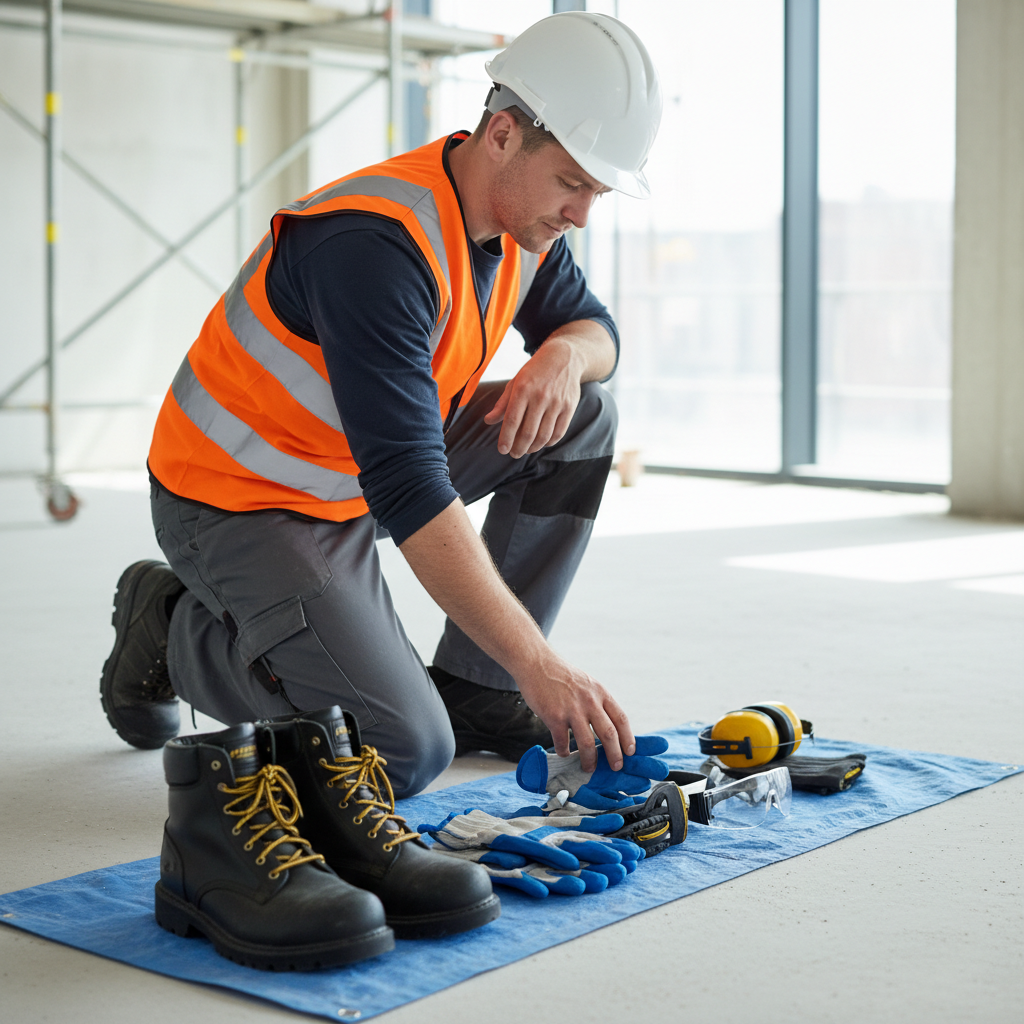
A typical small UK trade business will need to provide some or all of the following:
Head Protection
Hard hats for any work where there is a risk of falling objects, head bumps or contact with energised conductors. EN 397 or EN 50365 rated.
Eye Protection
Safety glasses, goggles or face shields for grinding, cutting, drilling, chemical handling and any task creating airborne particles. EN 166 rated.
Hearing Protection
Ear defenders or plugs where noise exceeds the lower exposure action value of 80 dB(A). You should measure noise, not just guess.
Respiratory Protection (RPE)
FFP3 masks or powered respirators where there is a risk of dust, fumes or vapour. Tight-fitting RPE requires face fit testing for every wearer.
Hand Protection
Gloves appropriate to the hazard. Cut resistant for sheet metal. Chemical resistant for solvents. Insulated for electrical work. EN 388, EN 374 or EN 60903 rated as appropriate.
Foot Protection
Safety boots with steel or composite toe caps, midsole protection and slip resistance. EN ISO 20345 rated.
High Visibility Clothing
Class 2 or Class 3 hi-vis on any site where vehicles or plant operate, or where workers are on or near the highway. EN ISO 20471 rated.
Fall Protection
Harnesses, lanyards and energy absorbers where work at height cannot be avoided through other means. EN 361, EN 354, EN 355 rated. Inspection and training requirements are strict.
Free of Charge Means Free of Charge
Employers must not:
- Charge workers for PPE
- Deduct the cost from wages
- Require workers to buy their own boots, gloves or hi-vis
You can ask workers to take reasonable care of PPE and report damage. You can have a fair replacement policy for items lost or destroyed through obvious misuse. You cannot make it a condition of employment that they kit themselves out.
Fit Matters
One size does not fit all. PPE that does not fit properly is often worse than no PPE at all.
This is particularly important for:
- Female workers, who often need different harness designs and smaller glove and boot sizes
- Workers with facial hair, where tight-fitting RPE will not seal
- Workers with prescription glasses, who need over-glasses or prescription safety glasses
Face fit testing is mandatory for tight-fitting RPE and must be repeated whenever the wearer's face shape changes (weight loss, dental work, facial hair).
Training and Information
Providing PPE is not enough. Workers must be trained to use it.
The training should cover:
- Why the PPE is needed
- How to put it on and take it off
- How to check it before use
- Limitations of the equipment
- How to clean, store and report damage
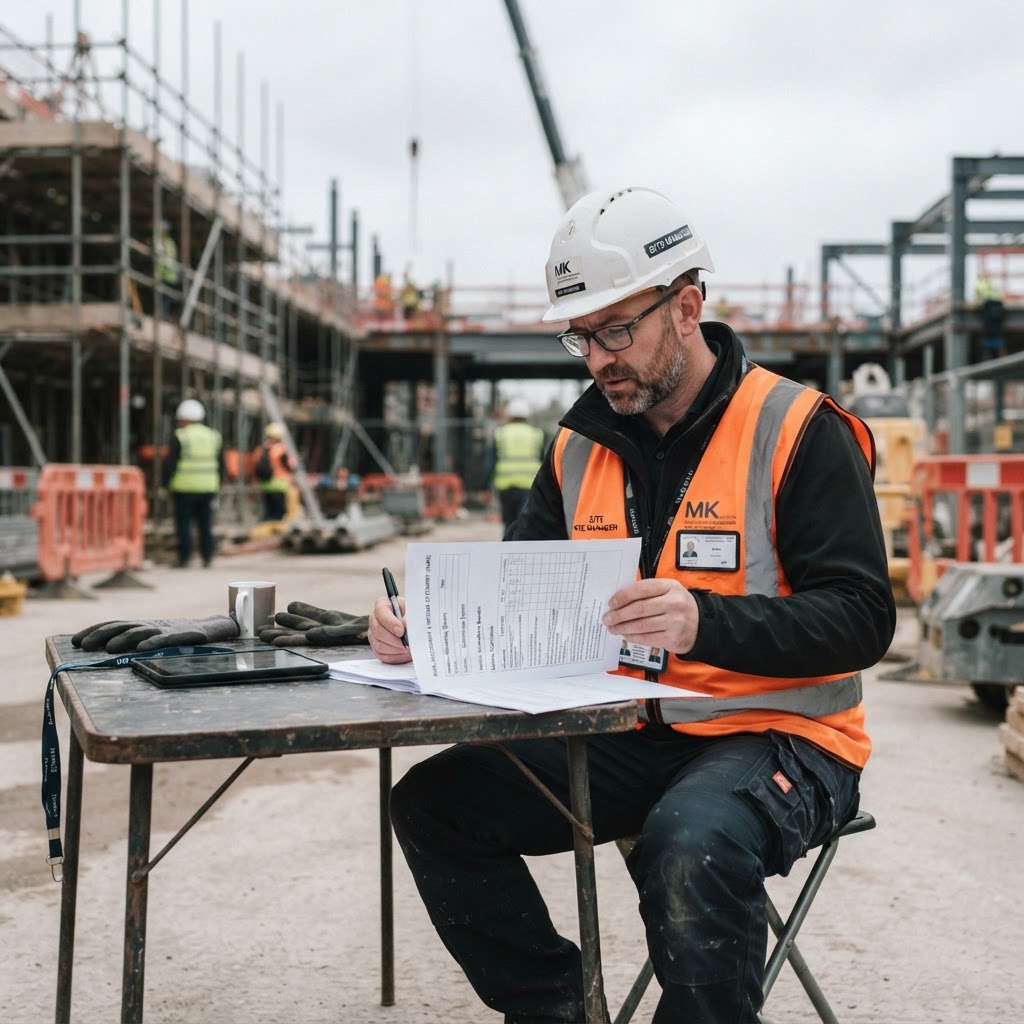
Document the training. A simple signed toolbox talk record is usually enough.
Inspection and Maintenance
PPE needs to be inspected before each use, and certain items need formal inspection.
Fall arrest equipment, for example, must be inspected:
- By the user before each use
- By a competent person at least every 6 months (12 months for some equipment)
Keep written records of formal inspections.
Common Mistakes
- Buying PPE based on price alone, not suitability
- Ignoring fit, especially for harnesses and RPE
- Failing to provide RPE face fit testing
- Treating site visitors and subcontractors as someone else's problem
- No system for replacing damaged PPE quickly
- No training records
- Storing PPE in vans where it gets damaged by tools and weather
Final Thoughts
Getting PPE right is one of the most visible signs of a well-run site. It is also one of the cheapest ways to protect your workers and your business.
The core message is simple. Assess the risk. Provide suitable, well-fitting equipment free of charge. Train your workers. Keep records. Replace it when it is damaged.
Do that, and you will be ahead of the vast majority of small UK contractors.