By James Whitaker · Published 31 October 2026 · 3 min read
C Watkins Plumbing Limited has been prosecuted by the Health and Safety Executive after a roof fire at an apartment block left four workers fleeing for their lives. The workers were forced to escape the blaze using a single ladder. An investigation revealed the contractor had no fire extinguishers, no means of raising an alarm, and no permit for the welding work that started the fire. The incident highlights a severe breakdown in basic site safety protocols.
Background
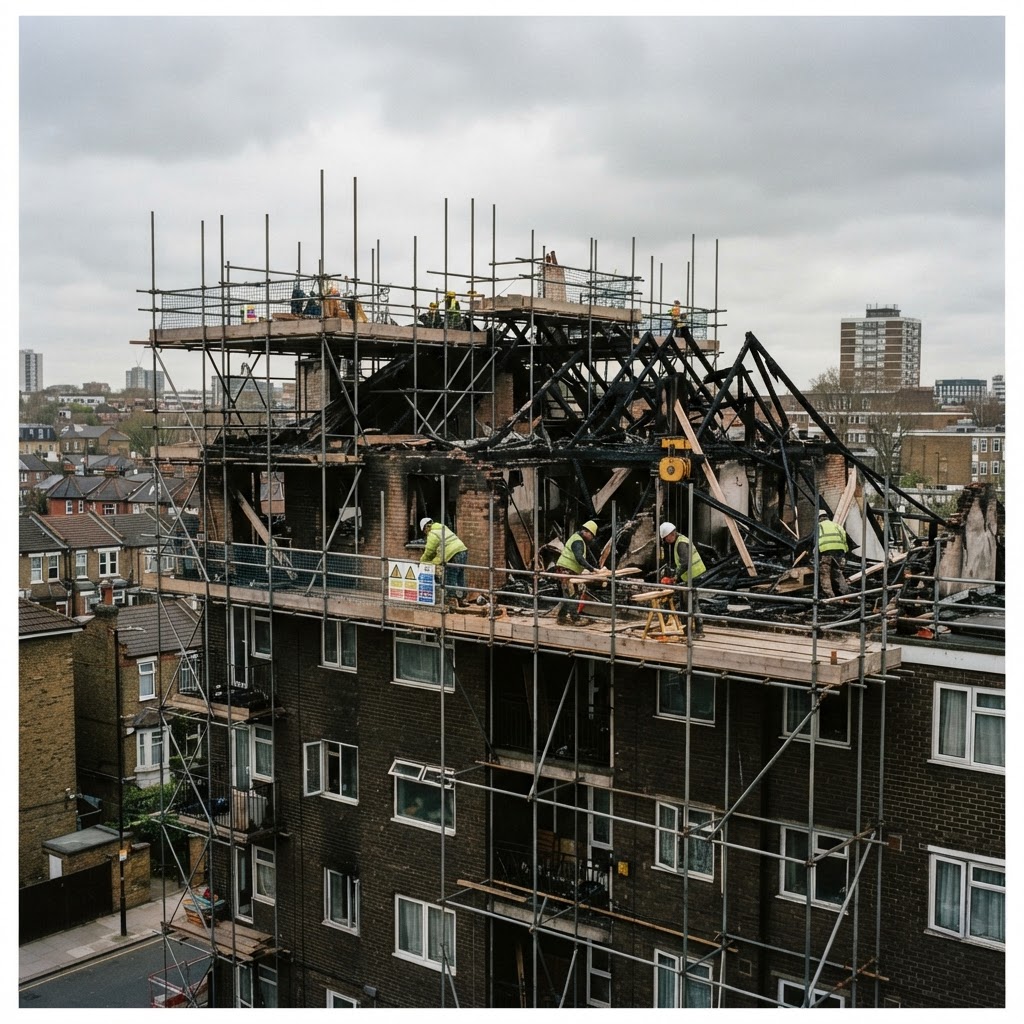
Hot work on construction sites remains a heavily regulated activity under the Construction (Design and Management) Regulations 2015. Contractors must implement strict controls when welding or using abrasive wheels near combustible materials. In this incident, the complete absence of a hot work permit system meant basic fire prevention steps were ignored. The HSE noted that the workers were extremely lucky to escape without serious injury or worse. Photos taken after the fire on the roof of the apartment block showed extensive damage to the structure. The failure to provide a safe escape route compounded the danger, leaving the four operatives with only one ladder to evacuate the burning roof.
Industry implications
This prosecution highlights the severe legal and financial risks of ignoring standard fire safety protocols. Principal contractors and subcontractors face immediate enforcement action if hot work is not strictly controlled. Insurance premiums for contractors found breaching fire safety regulations are also likely to rise significantly following such incidents. The case serves as a stark reminder that the HSE will prosecute even if no fatalities occur, provided the risk to life was severe. Furthermore, in the wake of the Building Safety Act, regulatory scrutiny on fire safety during the construction phase is at an all-time high. Clients are increasingly auditing their supply chains to ensure contractors have impeccable fire safety records before awarding tenders.
What contractors should do now
Site managers must immediately review their hot work permit procedures. Ensure that all welding or cutting operations are signed off by a competent person before work begins. Fire extinguishers must be present at the specific work location, not just at the site office. Furthermore, multiple escape routes must be established and communicated to all operatives working at height. Toolbox talks should be scheduled this week to reiterate the importance of fire safety and emergency evacuation procedures. Site supervisors must physically verify that alarm systems are functional and that permits are closed out correctly at the end of each shift.
Analysis
The failure to provide basic fire safety equipment like extinguishers and alarms points to a systemic breakdown in site management. This is not an isolated administrative error but a fundamental failure to protect workers. The HSE enforcement pattern shows zero tolerance for contractors who bypass hot work permits to save time. As building safety regulations tighten globally, the focus on fire prevention during the construction phase is sharper than ever. The fact that welding was taking place on a roof without a permit suggests a culture where production was prioritized over basic life safety. This prosecution should serve as a wake-up call to the entire plumbing and mechanical sector.
What happens next
C Watkins Plumbing Limited will face the financial penalties handed down by the court following this HSE investigation. The HSE is expected to continue its targeted inspections of high-risk construction activities, with a particular focus on fire safety and working at height. Contractors should anticipate unannounced site visits checking specifically for hot work compliance and emergency escape routes. Industry bodies are likely to issue updated guidance on managing fire risks during roof works in response to this near-miss event.
Sources
- Prosecution – HSE Media Centre — Health and Safety Executive