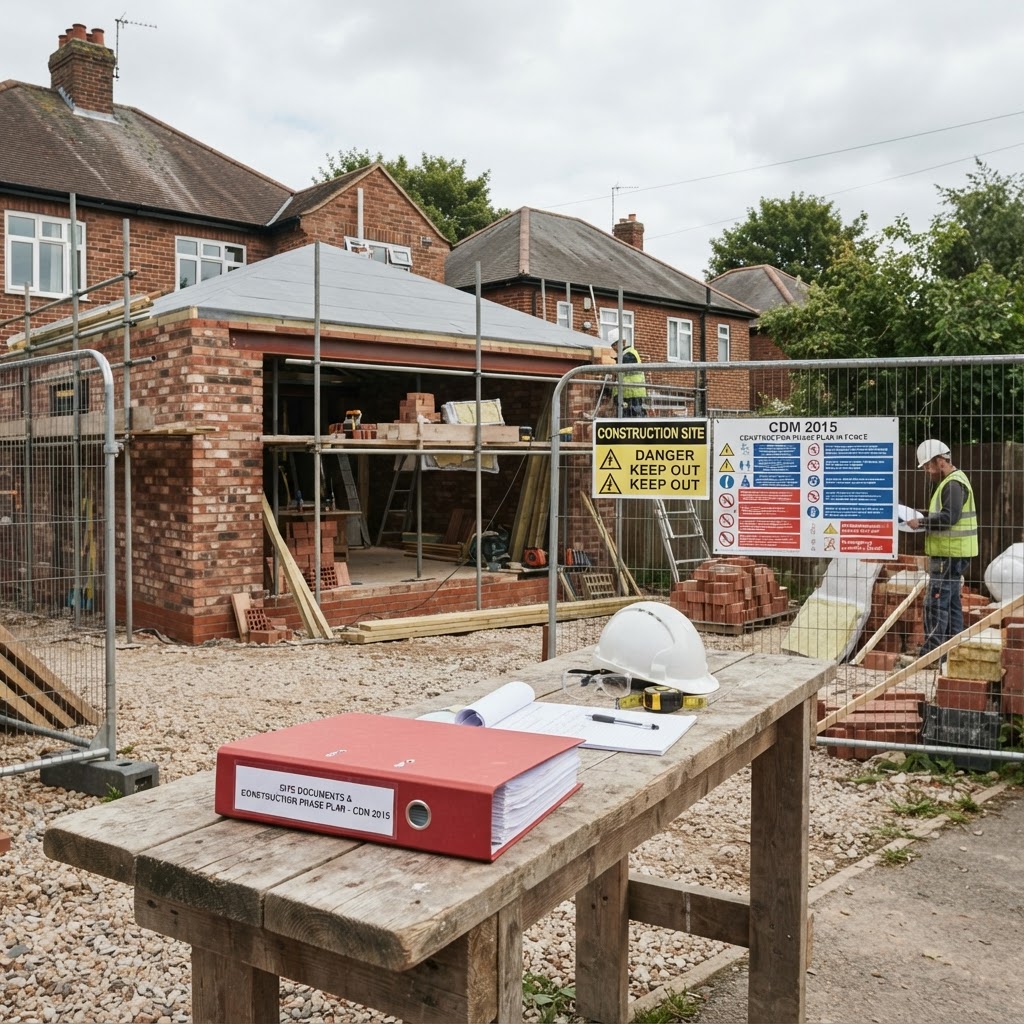
One of the most misunderstood duties in CDM 2015 is this: every construction project needs a construction phase plan (CPP) — including domestic jobs. Not just big sites. Not just notifiable projects. Every one.
If you're a small builder, an extension specialist or a trade contractor who sometimes acts as the only contractor on a job, this guide covers what the plan is, who writes it, and how to keep it proportionate to the work.
What is a construction phase plan?
The CPP is the document that sets out how health and safety will be managed during the construction phase of a project. It's required by Regulation 12 of the Construction (Design and Management) Regulations 2015.
On a single-contractor job — which covers most domestic extensions, refurbs and small commercial works — the contractor writes it. On a multi-contractor project, the principal contractor writes it, and it must be in place before the site is set up.
What goes in a proportionate CPP
The HSE is explicit that the plan should be proportionate to the size and risk of the job. For a small project, a few pages covering the following is appropriate:
1. Project description
- The client, the site address, a description of the work and the expected timescales
- Key dates and the project team
2. Management arrangements
- Who is in charge of the site day to day
- How you'll induct workers and communicate (site inductions guide)
- How you'll brief on risks — toolbox talks with signed records are the standard evidence
- Welfare arrangements: toilet, washing, rest area (a legal requirement from day one, even on domestic jobs)
3. Site rules
- PPE requirements, deliveries, parking, hours of work, securing the site against children and the public
4. The significant site-specific risks and controls
This is the core. Identify the risks particular to this job and how you'll control them, for example:
- Work at height and the access method
- Structural stability during alterations
- Buried and overhead services
- Asbestos in pre-2000 buildings (what tradesmen must know)
- Dust, noise and vibration
- Public and occupant safety on occupied sites
Reference your risk assessments and RAMS rather than duplicating them — the plan can point to the detailed documents.
5. Emergency arrangements
- First aid provision, fire arrangements, emergency contacts, nearest A&E
Common questions
Does a one-day job need a CPP? If it's construction work under CDM, yes — but for a genuinely simple, low-risk job the plan can be very short. The HSE's own guidance (and their CDM Wizard app) reflects this.
Is the CPP the same as a RAMS pack? No, but they overlap. The CPP manages the whole construction phase; the RAMS covers specific tasks. On a small single-trade job the documents work together — a short plan plus your task RAMS is a sensible structure.
Do I need an F10 notification too? Only if the project is notifiable: lasting more than 30 working days with 20+ workers simultaneously, or exceeding 500 person-days. See our F10 notification guide.
Keeping it manageable
The trap for small firms is either ignoring the duty entirely or producing a 40-page template of boilerplate nobody reads. Both fail an HSE inspection. A short, genuinely site-specific plan beats a long generic one every time.
Site Safety UK keeps your risk assessments, method statements, toolbox talk records and site audits organised per project, so the documents your CPP references are always current and in one place. Start a free trial — no card needed.