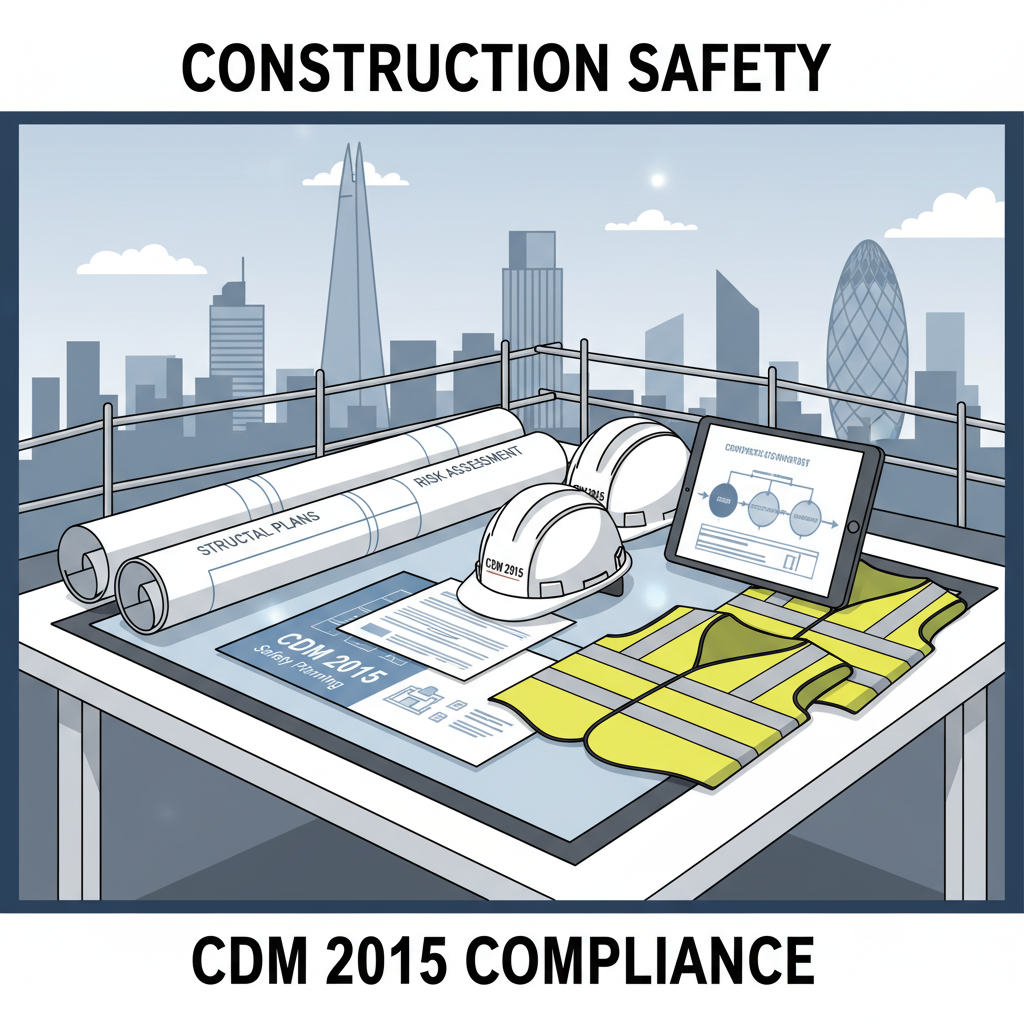
If you work in construction, you have probably heard people mention CDM 2015. But for a lot of small builders, homeowners and contractors, the rules can feel confusing fast.
The good news is that the basics are actually pretty straightforward.
CDM stands for the Construction (Design and Management) Regulations 2015. The regulations were introduced to improve health, safety and planning on construction projects across the UK.
In simple terms, CDM is about making sure construction work is planned properly, risks are managed and everyone goes home safe.
Does CDM Apply to Small Projects?
Yes.
A common myth is that CDM only applies to massive commercial building sites. That is not true.
CDM applies to almost every construction project, including:
- Home extensions
- Loft conversions
- Renovations
- Roofing work
- Kitchen refits
- Demolition work
- Commercial refurbishments
Even small domestic jobs still fall under CDM regulations.
Who Has Duties Under CDM?
CDM assigns responsibilities to different people involved in a project.
Clients
The client is the person paying for the work. This could be:
- A homeowner
- A business
- A landlord
- A developer
Clients must make sure suitable arrangements are in place for managing health and safety.
Principal Designer
The principal designer is responsible for managing health and safety during the design phase.
They help identify risks before construction starts.
Principal Contractor
The principal contractor manages health and safety during the construction phase.
They coordinate contractors and make sure work is carried out safely.
Contractors
Contractors must:
- Work safely
- Follow site rules
- Cooperate with others on site
- Report hazards and risks
What Happens If You Ignore CDM?
Ignoring CDM regulations can lead to:
- HSE investigations
- Fines
- Project delays
- Unsafe working conditions
- Serious injuries or worse
In some cases, businesses can also damage their reputation and lose future work.
What Documents Are Needed?
This depends on the size and complexity of the project, but common CDM documents include:
- Construction Phase Plan
- Risk Assessments
- Method Statements
- Site inductions
- F10 notification in some cases
A lot of smaller projects still require basic documentation, even if the paperwork is simpler.
Do Domestic Clients Have Responsibilities?
Yes, but their duties are usually transferred to the contractor or principal contractor.
This means homeowners are still covered under CDM, even if they are not expected to manage the regulations themselves.
Why CDM Actually Matters
Many people see CDM as just paperwork.
In reality, good planning prevents accidents, confusion and expensive mistakes.
Simple things like:
- Clear access routes
- Proper welfare facilities
- Safe sequencing of work
- Good communication
can make a huge difference on site.
Final Thoughts
CDM 2015 is not just for large construction firms.
Whether you are building an extension, managing subcontractors or planning commercial works, the regulations are likely to apply to your project.
Understanding the basics early can save time, reduce risk and help projects run far more smoothly.
If you are unsure what your responsibilities are under CDM 2015, getting professional advice early is usually far cheaper than dealing with problems later.