Risk Assessments Explained: What They Are and Why Every Business Needs Them
Risk assessments are one of the most talked about parts of health and safety.
They are also one of the most misunderstood.
A lot of people think a risk assessment is just paperwork that sits in a folder collecting dust. In reality, a good risk assessment is simply a way of spotting problems before somebody gets hurt.
What Is a Risk Assessment?
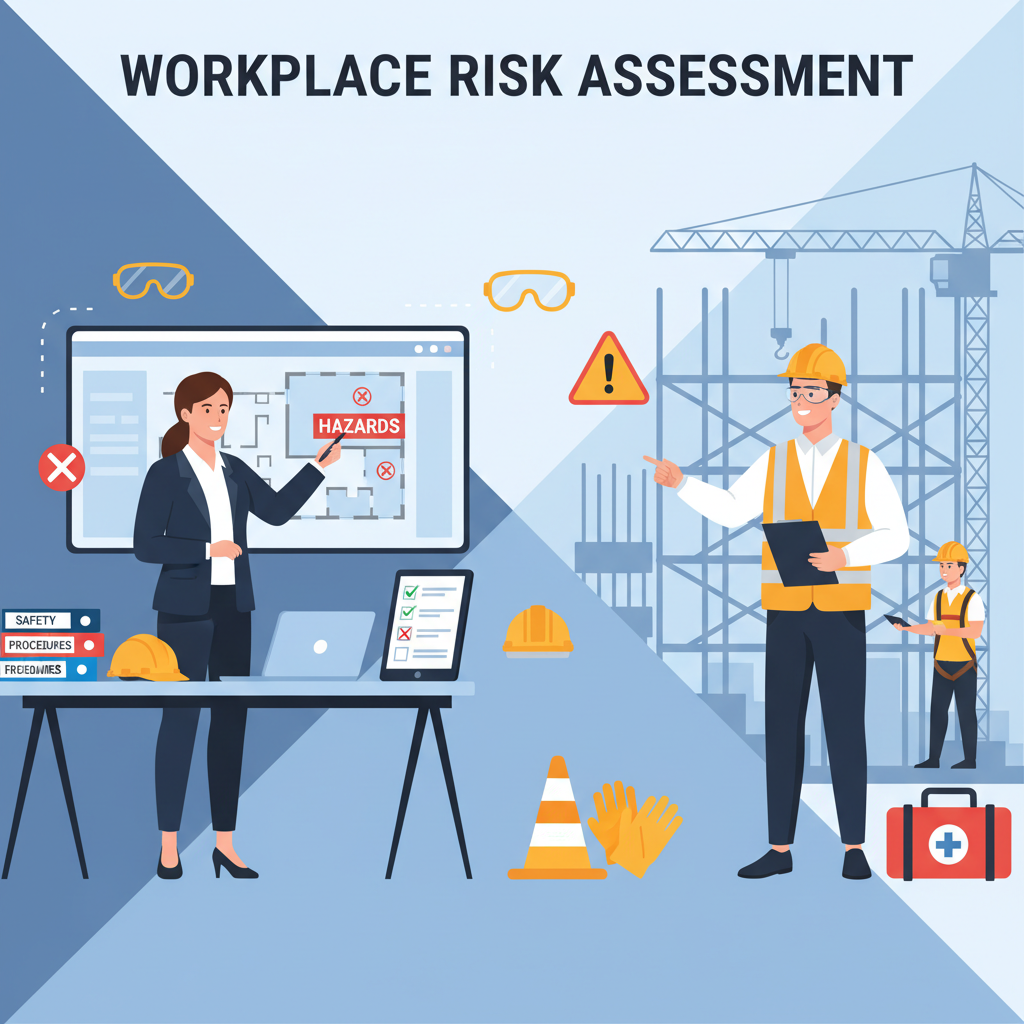
A risk assessment is the process of identifying:
- Hazards in the workplace
- Who could be harmed
- How injuries could happen
- What controls are needed to reduce risk
It is about thinking ahead instead of reacting after an accident happens.
What Counts as a Hazard?
A hazard is anything that could cause harm.
Common workplace hazards include:
- Slips and trips
- Working at height
- Electricity
- Moving vehicles
- Dust and fumes
- Heavy lifting
- Loud noise
- Poor housekeeping
Every workplace has hazards, even offices and small shops.
Do Small Businesses Need Risk Assessments?
Yes.
Many small business owners assume health and safety only applies to large companies or construction sites.
That is not true.
If you employ staff, you have legal responsibilities to manage workplace risks properly.
Even self-employed people may still need risk assessments depending on the type of work they carry out.
How Do You Carry Out a Risk Assessment?
A simple risk assessment usually follows five steps.
1. Identify the Hazards
Walk around the workplace and look for anything that could cause harm.
Speak to workers as well. They often notice risks management misses.
2. Decide Who Could Be Harmed
Think about:
- Employees
- Contractors
- Visitors
- Members of the public
Different people may face different risks.
3. Evaluate the Risks
Consider:
- How likely an incident is
- How serious the outcome could be
- What controls are already in place
Then decide if further action is needed.
4. Record Your Findings
If you employ five or more people, you must record significant findings.
Clear, simple documents are usually far more effective than overly complicated forms.
5. Review Regularly
Risk assessments should not be forgotten once completed.
Review them if:
- Work activities change
- New equipment is introduced
- An accident happens
- Existing controls are not working
Common Mistakes Businesses Make
One of the biggest mistakes is copying generic assessments from the internet without changing them.
A risk assessment should reflect the actual workplace, not a random template downloaded online.
Another issue is overcomplicating everything.
Health and safety documents should be practical and easy for workers to understand.
Why Risk Assessments Actually Matter
A proper risk assessment can help businesses:
- Prevent injuries
- Reduce downtime
- Improve staff confidence
- Avoid enforcement action
- Lower accident-related costs
Most workplace accidents are preventable with basic planning and sensible controls.
Final Thoughts
Risk assessments are not about creating paperwork for the sake of it.
They are about identifying problems early and making workplaces safer for everyone involved.
Done properly, they protect employees, businesses and the public while helping work run more smoothly day to day.