By James Whitaker · Published 8 November 2026 · 3 min read
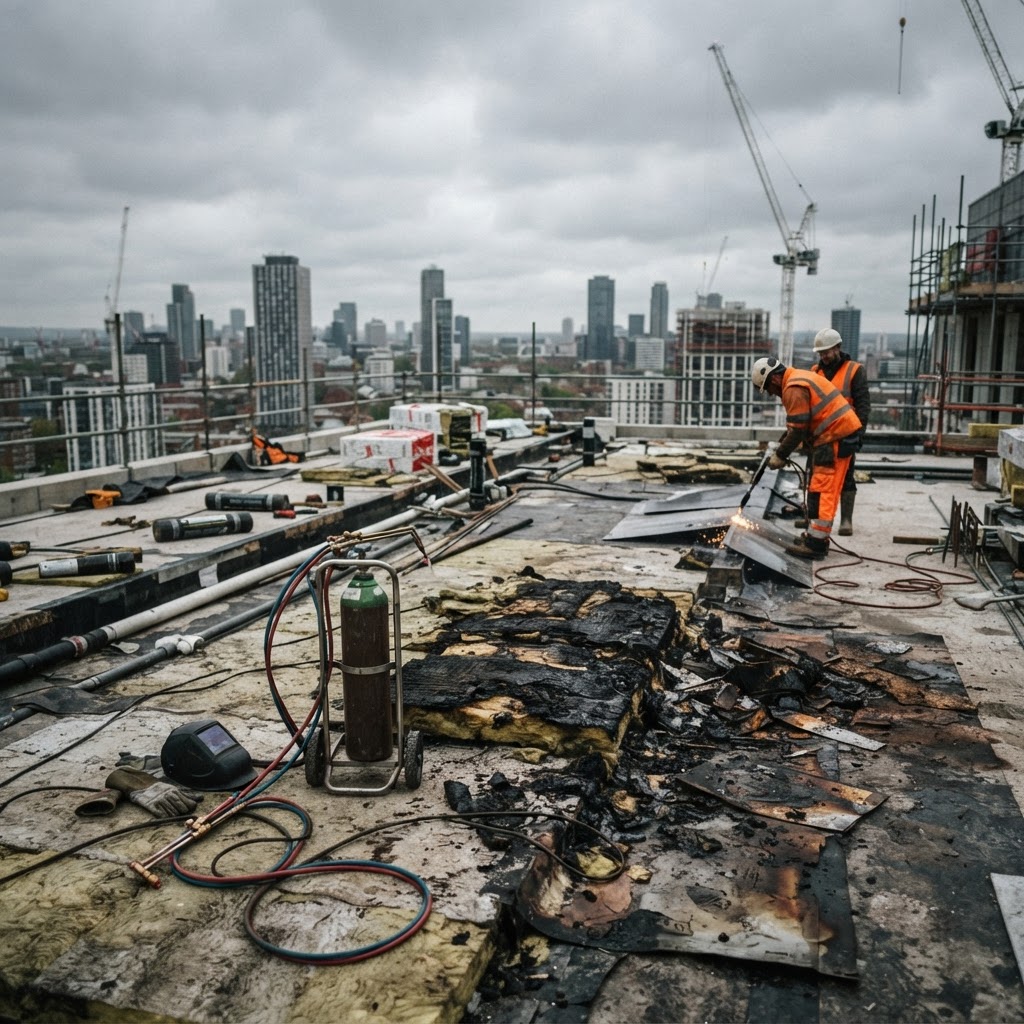
A plumbing contractor has been fined £20,000 after four workers were forced to flee a rapidly spreading fire on the roof of a 14-storey apartment block in Surrey. The blaze, caused by uncontrolled hot works, highlights severe failings in site risk management.
Background
On 26 July 2024, four subcontractors working for C Watkins Plumbing Ltd were installing an air source heat pump on the roof of the Old Telephone Exchange development in Staines-upon-Thames. Sparks from welding equipment ignited uncovered rigid foam insulation. The fire quickly became self-sustaining and spread across the entire roof space before burning itself out. The Health and Safety Executive (HSE) launched an investigation into the incident. The probe revealed that C Watkins Plumbing Ltd had failed to plan, manage and monitor the hot works. Despite having internal policies requiring them, the company had not put a risk assessment or method statement in place. Furthermore, no permit to work was issued for the welding activities.
Industry implications
This prosecution serves as a stark reminder of the financial and reputational risks associated with poor hot works management. C Watkins Plumbing Ltd, based in Ramsgate, Kent, pleaded guilty to breaching Regulation 15(2) of the Construction (Design and Management) Regulations 2015. At Staines Magistrates' Court on 29 October 2026, the firm was fined £20,000 and ordered to pay £8,270 in costs. Beyond the immediate financial penalty, incidents involving high-rise fires attract intense regulatory scrutiny. Principal contractors face increased pressure to ensure subcontractors strictly adhere to site-specific fire safety protocols.
What contractors should do now
Site managers must immediately review their hot works permitting systems. Ensure that all welding, cutting or grinding activities are subject to a rigorous permit-to-work process. Combustible materials, such as rigid foam insulation, must be removed or protected with fire-retardant blankets before hot works commence. Contractors must also verify that fire extinguishers are present at the work location and that a dedicated fire watch is maintained during and after the activity. Method statements must be site-specific and communicated clearly to all operatives before work begins.
Analysis
The failure to follow internal procedures is a recurring theme in HSE prosecutions. HSE inspector Stephanie Hickford-Smith confirmed this pattern, stating: "Watkins failed to follow its own procedures for hot works. It did not assess the risks and so had no control measures in place." Having a written policy is legally meaningless if site management fails to enforce it. The fact that four workers had to escape a 14-storey roof fire demonstrates a catastrophic breakdown in basic site supervision. The HSE expects fire safety measures to be integrated from the design phase through to procurement and active construction.
What happens next
The HSE is expected to maintain a strict enforcement stance on fire safety failings on high-rise construction sites. Contractors working on higher-risk buildings should anticipate unannounced inspections focusing on hot works controls and combustible material storage. Firms that fail to demonstrate active monitoring of their permit-to-work systems risk immediate prohibition notices and subsequent prosecution.
Sources
- Construction News — Construction News