By Marcus Hale · Published 18 June 2026 · 3 min read
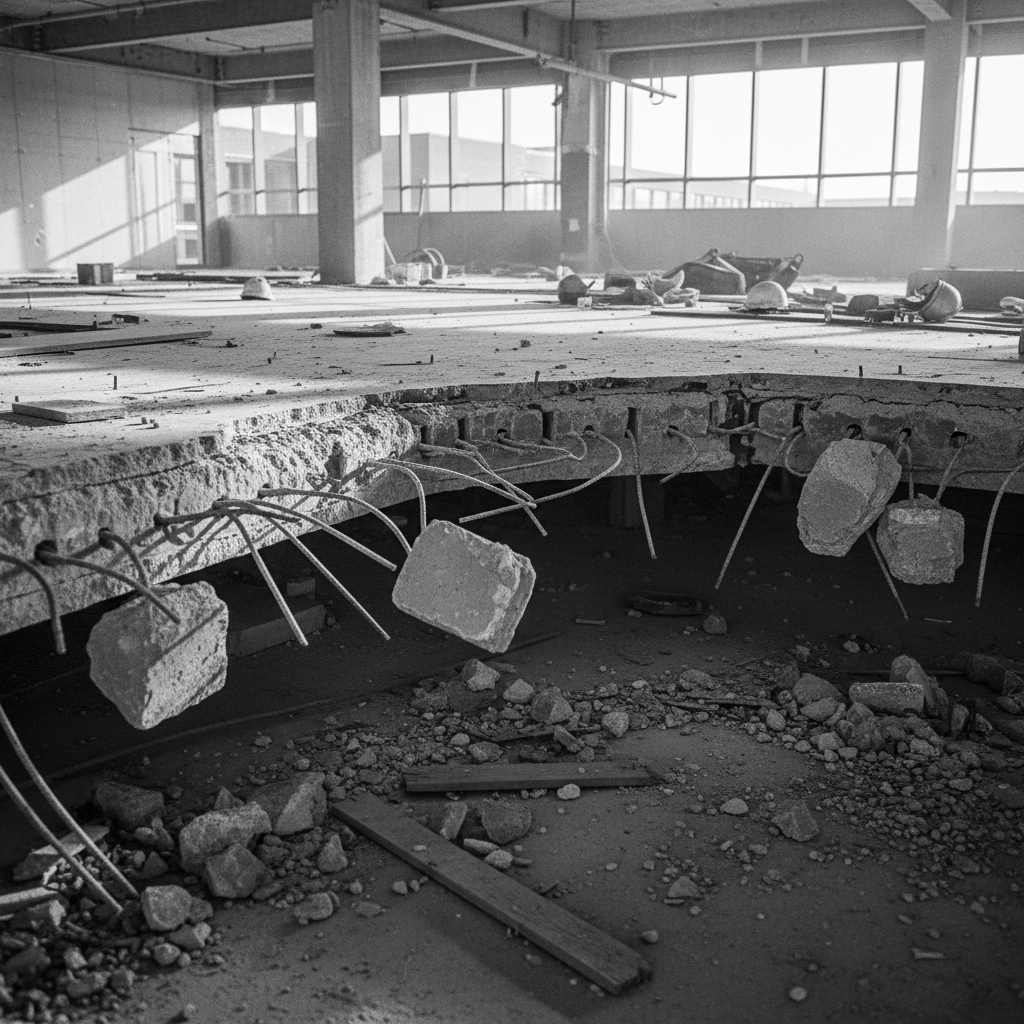
Two construction companies have been fined after a 60-year-old drilling operative sustained life-changing neck and back fractures when a temporary platform collapsed under the weight of concrete debris. The incident occurred during a major refurbishment project at Paxton House in the City of London on 23 February 2024. Roots Contractors Limited and Diacutt Limited pleaded guilty to health and safety breaches at Westminster Magistrates' Court on 11 June 2026, receiving combined fines exceeding £32,000. The case serves as a stark reminder of the strict legal duties surrounding temporary works planning.
Background
Principal contractor Roots Contractors Limited was managing the Paxton House commercial refurbishment, which involved cutting complex openings through five concrete floors to create a new service riser shaft. Specialist drilling contractor Diacutt Limited was engaged to execute the structural cutting works. The operative, Steve Zschoch, was working on a temporary wooden platform when it structurally failed under the load of removed concrete. An investigation by the Health and Safety Executive (HSE) revealed there was no formal design for the temporary platforms. Furthermore, no calculations had been carried out by either company to establish their safe load capacity before operatives accessed them.
Industry implications
The prosecution highlights the severe legal and financial consequences of neglecting temporary works design and structural integrity. Although inspection paperwork for the platforms had been filled out on site, the HSE found the individual carrying out the checks was not a competent temporary works coordinator. The failure to identify critical design defects directly led to the catastrophic collapse. Furthermore, the HSE noted a complete lack of direct supervision by Diacutt management in the week preceding the incident, compounding the risk. Roots Contractors Limited was fined £19,333 plus £5,548 in costs for breaching Regulation 16(2) of the Construction (Design and Management) Regulations 2015. Diacutt Limited was fined £13,000 plus £5,548 in costs under Regulation 15(2).
What contractors should do now
Principal contractors must ensure all temporary works are formally designed by a competent engineer and supported by explicit load calculations prior to installation. Businesses must formally appoint a qualified temporary works coordinator to inspect and sign off structures at every stage of the build. Site management must also enforce clear exclusion zones so operatives do not work directly beneath one another, which was a secondary risk factor identified by inspectors at the Paxton House site.
Analysis
The fact that paperwork was completed by an unqualified individual demonstrates a dangerous compliance tick-box culture that regulators are actively seeking to prosecute. HSE inspector Lucy Ellison-Dunn stated that the incident was entirely avoidable and had the tragic effect of "seriously injuring Mr Zschoch and ending his construction career much earlier than he wanted." The ruling underlines that courts will hold both the principal contractor and the specialist subcontractor strictly liable when temporary works protocols are bypassed, regardless of who physically erected the platform.
What happens next
The HSE continues to target temporary works compliance during unannounced site inspections. Contractors operating without designated, trained temporary works coordinators face immediate prohibition notices and severe financial penalties. Companies involved in structural alterations should review their site supervision procedures immediately to ensure daily managerial oversight is documented, effective, and capable of identifying structural risks before catastrophic failures occur.
Sources
- HSE Media Centre — Health and Safety Executive