By James Whitaker · Published 15 June 2026 · 3 min read
Background
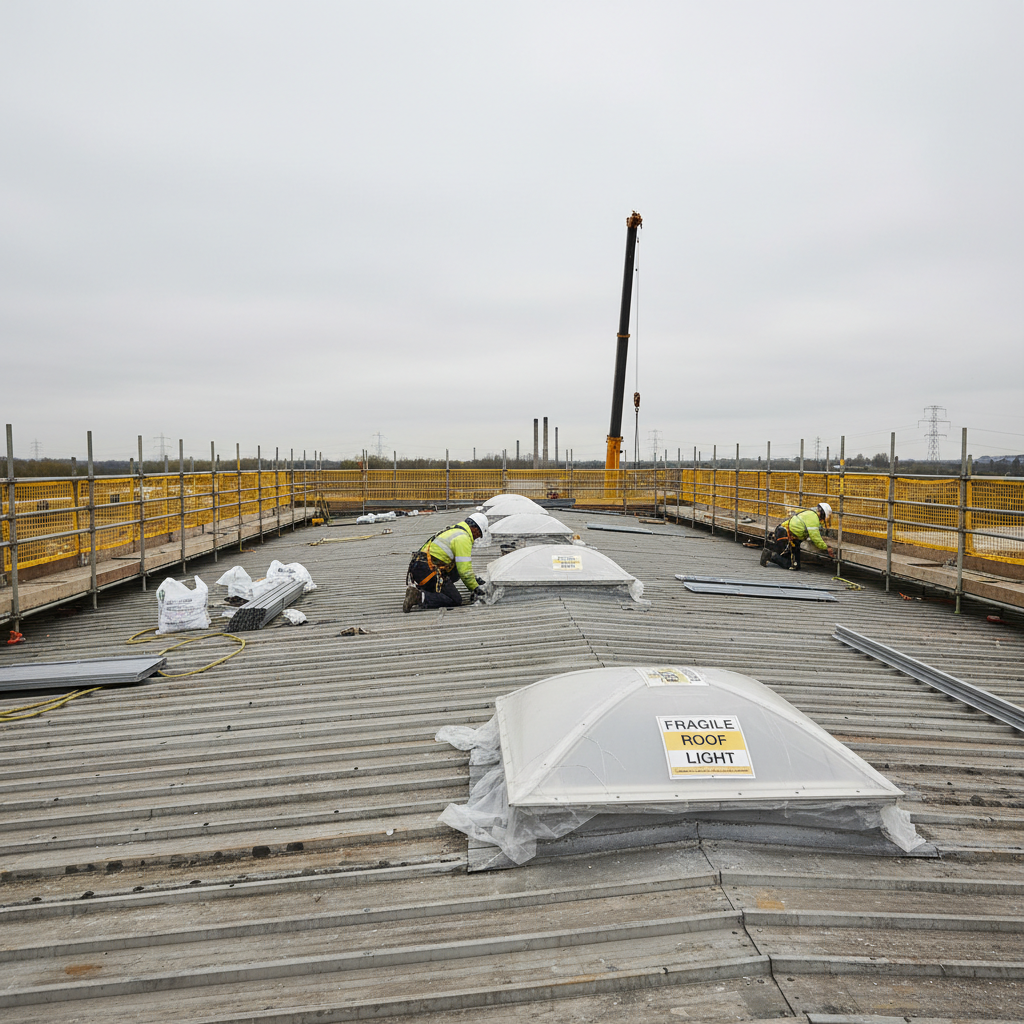
Clover Access Systems Limited, which went into liquidation last month, and principal contractor STM360 Limited failed to plan, manage or monitor the installation of temporary edge protection. An investigation by the Health and Safety Executive found no measures were in place to prevent falls from the roof edge or through fragile materials. The skylight was described by investigators as almost invisible to the workers on site. The incident was captured on CCTV, showing the operative falling onto a pallet truck before landing heavily on the warehouse floor.
Industry implications
The case highlights the severe financial and legal consequences of poor principal contractor oversight. STM360 Limited pleaded guilty to breaching Regulation 13 of the Construction (Design and Management) Regulations 2015. The firm received a £53,300 fine and was ordered to pay £3,167 in costs. Clover Access Systems pleaded guilty under Regulation 15 of the same legislation, receiving a £26,000 fine at Leeds Magistrates Court on 4 June 2026. The financial penalties demonstrate that courts will hold principal contractors jointly liable when specialist subcontractors fail to work safely.
What contractors should do now
Principal contractors must rigorously vet the risk assessments and method statements of scaffolding subcontractors before authorising work at height. Site managers must identify all fragile roof surfaces, map them clearly in the Construction Phase Plan, and ensure physical barriers or crash decks are installed before operatives access the roof. The Health and Safety Executive guidance details a strict hierarchy of control for work involving fragile surfaces, stating that duty holders must first seek to avoid the need for access to fragile roofs entirely.
Expert view
Health and Safety Executive Inspector Shauna Halstead stated that the operative is incredibly lucky to be alive following the incident. Halstead confirmed the regulator will not hesitate to take enforcement action where roof work is improperly managed. The prosecution underlines a continuing regulatory intolerance for basic fall-from-height failures. It also serves as a stark reminder that the liquidation of a subcontractor does not prevent the criminal prosecution of the principal contractor overseeing the site.
What happens next
Inspectors will continue targeting unannounced site visits at warehouse refurbishment projects throughout 2026. Principal contractors can expect heightened scrutiny regarding their management of specialist subcontractors and their adherence to the working at height hierarchy of control. Companies involved in roof work must ensure their safety protocols are documented, communicated and strictly enforced on site.
Sources
- Health and Safety Executive — HSE Press Office
- Roofing Today — Roofing Today