By James Whitaker · Published 23 June 2026 · 3 min read
Roots Contractors Limited and Diacutt Limited have been fined a combined £32,333 after a 60-year-old worker suffered a fractured neck when a temporary wooden platform collapsed during a City of London refurbishment. The incident left the operative with life-altering injuries, serving as a stark reminder of the severe consequences of failing to plan temporary works.
Background
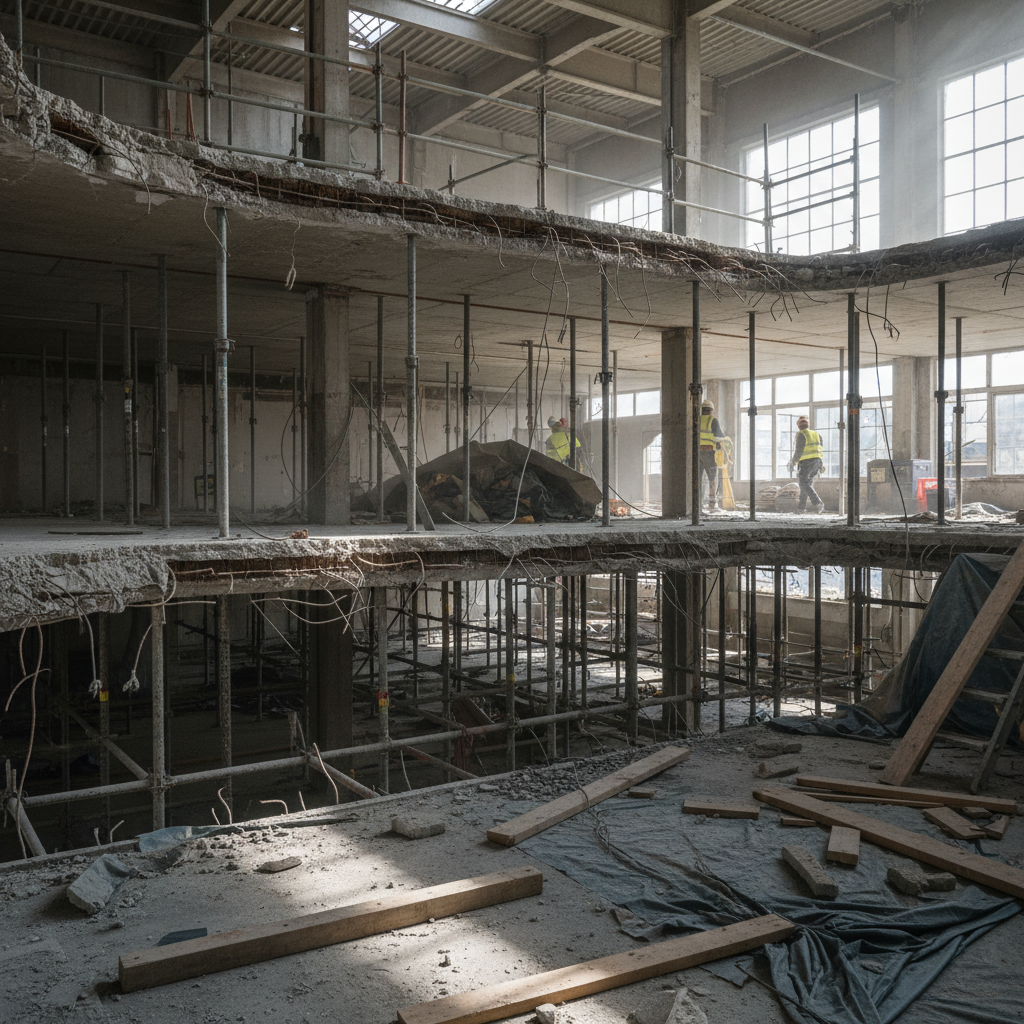
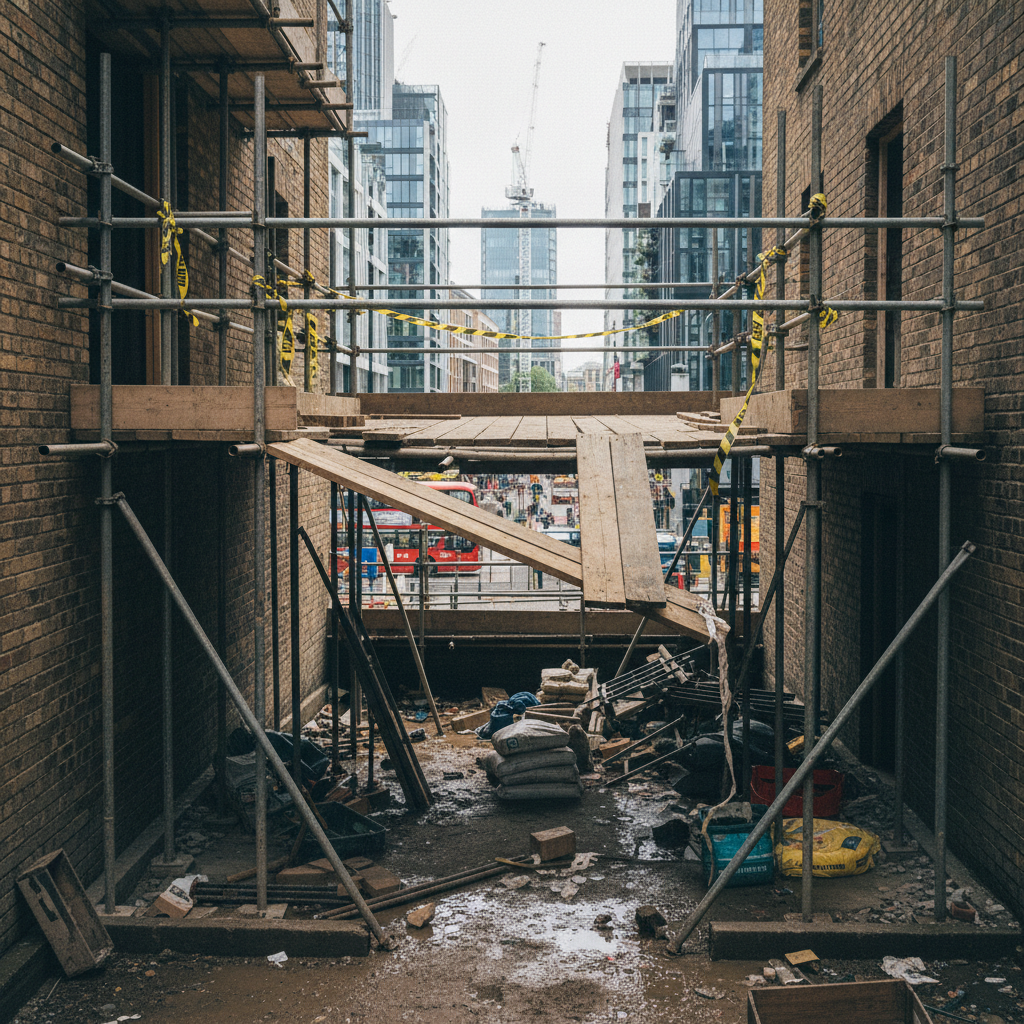
The prosecution follows a catastrophic failure on a London site where structural drilling was taking place. Operative Steve Zschoch was standing on a temporary wooden platform when it suddenly gave way. He fell violently, later describing how he was folded up like a concertina. The 60-year-old suffered a fractured neck and has been unable to return to work since. An investigation by the Health and Safety Executive revealed fundamental failures in the design and management of the site. There was no design document for the temporary platforms. Consequently, no calculations had been made to determine the safe level of loading required for the work.
Industry implications
The investigation exposed a total breakdown in coordination between the principal contractor and the subcontractor. Diacutt Limited provided risk assessments and method statements that were highly inconsistent. Their requirements for the principal contractor, Roots Contractors Limited, to provide crash decks were deeply unclear. Furthermore, HSE inspectors found a complete lack of supervision of the drilling team by Diacutt management in the week leading up to the incident. While operatives on the ground understood they should not work directly below one another, the absence of clear coordination meant it was entirely unclear who should have been working where on the day of the collapse.
What contractors should do now
Principal contractors must appoint a competent temporary works coordinator for all structural projects. You must ensure that bespoke designs and accurate loading calculations are completed and signed off for all temporary platforms before any worker steps onto them. Do not rely on generic method statements. Ensure that all requests for safety infrastructure, such as crash decks, are explicitly agreed upon in writing between the principal contractor and subcontractors. Finally, coordinate overlapping trades strictly to ensure workers are not operating in vertical alignment without solid, load-bearing protection between them.
Expert view
HSE inspector Lucy Ellison-Dunn highlighted a critical failure in the site's safety auditing. While an inspection form for the platform had been completed, it failed to identify any issues with the design. The person tasked with completing this form was not a competent temporary works coordinator. This highlights a dangerous industry trend where safety paperwork is treated as an administrative box-ticking exercise rather than a vital engineering check. Without true competence, signed inspection forms offer a false sense of security that ultimately puts lives at risk.
What happens next
The legal proceedings concluded at Westminster Magistrates' Court on 11 June 2026. Roots Contractors Limited of Ewell, Surrey, pleaded guilty to breaching Regulation 16(2) of the Construction (Design and Management) Regulations 2015. The firm was fined £19,333 and ordered to pay £5,548 in costs. Diacutt Limited of Croydon pleaded guilty to breaching Regulation 15(2) of the same legislation, receiving a £13,000 fine alongside £5,548 in costs. The HSE is expected to maintain its focus on temporary works compliance during unannounced inspections across London this summer.
Sources
- HSE Press Release — Health and Safety Executive