By Marcus Hale · Published 5 June 2026 · 3 min read
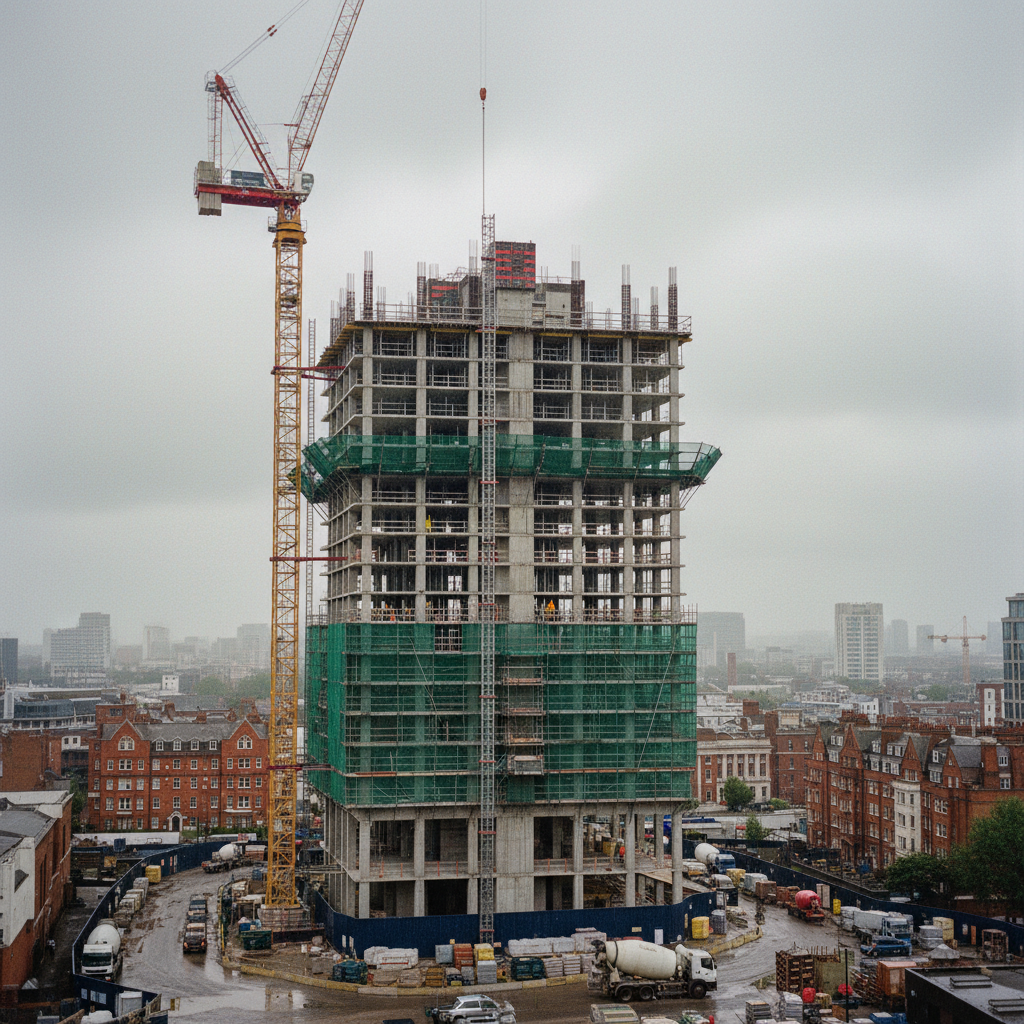
The Building Safety Regulator (BSR) has officially cleared more new homes than it has received applications for, marking the first time the Gateway 2 bottleneck has reversed. In the 12 weeks to 30 May 2026, the regulator processed applications for 14,928 homes while receiving just 13,964 new submissions. The data, published in early June 2026, signals that the severe delays which have plagued high-risk residential building projects are finally easing.
Background
The BSR took on full statutory powers under the Building Safety Act 2022 to regulate high-rise residential buildings. Gateway 2 requires developers to secure building control approval before construction can begin. Initial rollout was beset by industry complaints over slow turnaround times, creating a significant backlog of projects waiting for the green light. The regulator responded by introducing an Innovation Unit and a specialised batching process to accelerate engineering assessments and clear the 2024 legacy caseload.
Industry implications
Approval rates are climbing sharply. Across all Gateway 2 categories, the BSR approved 75 percent of the 358 decisions made during the 12-week period. The specialist Innovation Unit performed even better, achieving a 90 percent approval rate for new-build high-rise schemes by signing off 28 out of 31 applications. Consequently, 9,499 homes secured full approval. Contractors can expect a more predictable pipeline of work as the median time from a case being issued to a supplier to a decision has fallen to between 12 and 14 weeks. Regional data shows London remains the core hub for high-risk projects, accounting for 65 percent of all BSR decisions.
What contractors should do now
Firms planning high-risk residential work must ensure their Gateway 2 applications are comprehensive and free of design ambiguities. The BSR expects applicants to collaborate closely with the Innovation Unit on complex technical challenges. Project managers should factor a minimum 14-week assessment period into their pre-construction schedules and avoid submitting incomplete safety cases, which remain the primary cause for rejection. Clear documentation of dutyholder competence is mandatory.
Expert view
Charlie Pugsley, acting chief executive of the BSR, confirmed the regulator is seeing positive improvements in approval numbers and significantly faster decision times. He stated the BSR is working to accelerate assessments and improve consistency across the board. The latest figures prove that early engagement and the new batching pilot scheme are successfully clearing older files, leaving just 16 remediation applications from 2024 outstanding.
What happens next
The BSR will roll out further resources and support packages later this year to help applicants improve the quality of their initial submissions. Currently, applications covering 38,775 residential units remain under live consideration. A further 10 legacy applications are scheduled for determination by the end of June 2026. The regulator expects the median approval time to drop further as the final complex historical cases are cleared from the system and the new regulatory rhythm takes hold.
Sources
- BSR turns the tide as approvals outpace new home applications — Construction Enquirer
- Gateway approval decisions are speeding up, building safety regulator says — Building