By Marcus Hale · Published 12 June 2026 · 3 min read
Two construction companies have been fined a combined £79,300 after a 26-year-old scaffolder suffered serious injuries falling through a warehouse roof in West Yorkshire.
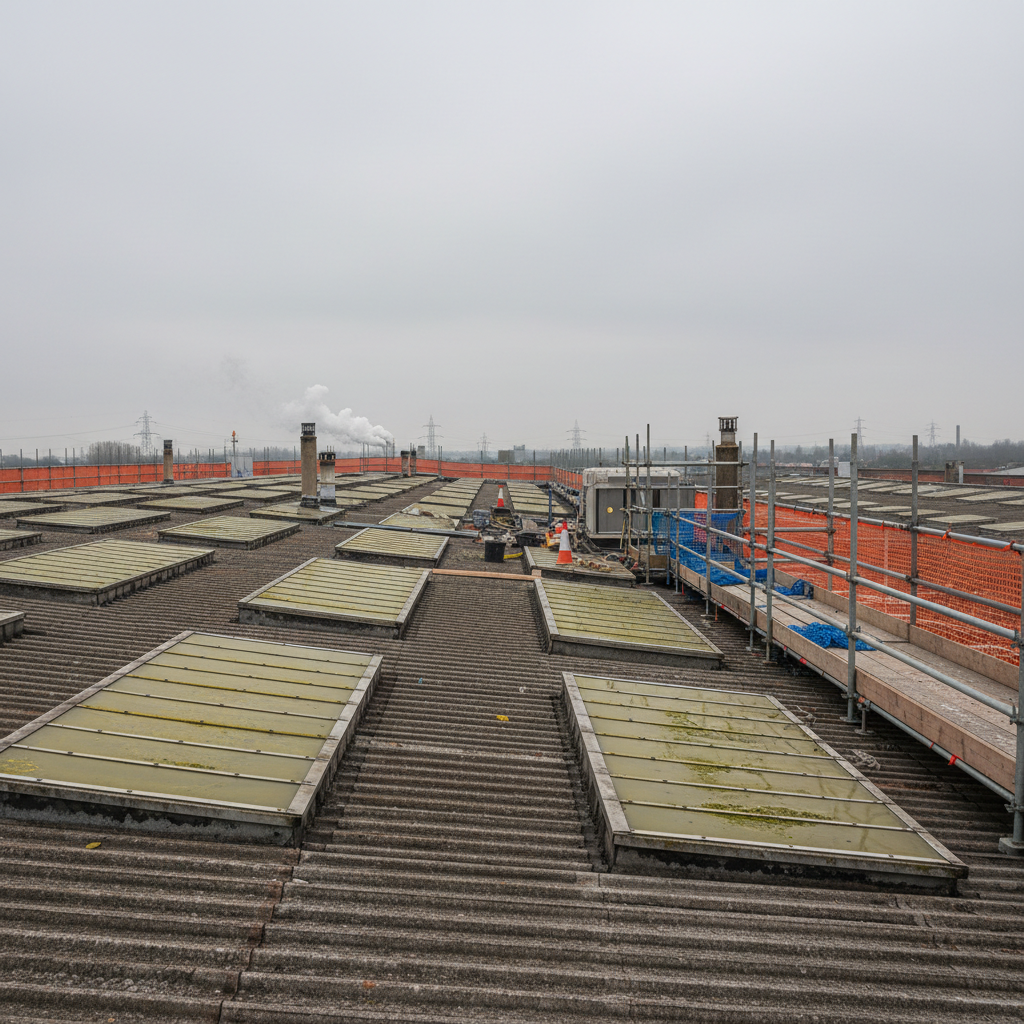
The incident, which was captured on CCTV, occurred at Acre Mills in Keighley on 14 January 2025. James Cranswick was installing temporary edge protection when he stepped on a fragile skylight, plummeting more than six metres onto a pallet truck and the concrete floor below. He sustained a broken arm, a broken leg and head lacerations.
Following an investigation, the Health and Safety Executive brought a prosecution against Clover Access Systems Ltd and STM360 Ltd. Both firms pleaded guilty to breaching the Construction (Design and Management) Regulations 2015 at Leeds Magistrates Court on 4 June 2026.
Background
Working at height remains the leading cause of fatal and serious injuries in the UK construction sector. Fragile roof surfaces, including weathered skylights, present a well-documented hazard.
According to the HSE, neither company had implemented measures to prevent workers from falling from the roof edge or through fragile elements. Investigators found that the skylights were almost invisible to workers on the roof, leaving Cranswick completely unaware of the danger.
STM360 Ltd admitted breaching Regulation 13 of the CDM Regulations 2015 and received a £53,300 fine alongside an order to pay £3,167 in costs. Clover Access Systems Ltd, which is now in liquidation, pleaded guilty to breaching Regulation 15. The firm was fined £26,000 and ordered to pay £2,866 in costs.
Industry implications
This prosecution underscores the strict liability placed on contractors and sub-contractors to coordinate safety measures before work begins. A failure to plan roof access correctly exposes site workers to life-changing injuries and leaves companies facing significant financial penalties.
When a company enters liquidation, as seen with Clover Access Systems Ltd, the HSE will still pursue convictions to establish legal fault. The combined fines of nearly £80,000 demonstrate the judiciary's willingness to levy heavy penalties for basic safety failures on temporary works.
What contractors should do now
Principal contractors must establish a clear hierarchy of control for roof work. The primary objective is to avoid access to fragile roofs entirely where practical. If access is unavoidable, physical protection such as crawling boards, safety nets or dedicated temporary edge protection must be installed before tasks commence.
Site managers should ensure comprehensive surveys are conducted to identify obscured skylights or degraded roof panels. Briefings and toolbox talks must highlight specific fragile zones to all trades operating at height.
Analysis
The severity of this incident highlights a persistent failure in risk communication between different layers of site management. HSE inspector Shauna Halstead confirmed that the fall was wholly avoidable, noting that the risks associated with fragile surfaces are widely understood across the sector.
The fact that a worker installing safety equipment was the one to fall points to a paradox often seen in HSE enforcement data. Those tasked with erecting edge protection or scaffolding are frequently exposed to the highest risks if safe systems of work are not strictly sequenced.
What happens next
Enforcement action around work at height is expected to increase as the HSE targets sites failing to manage fragile surfaces. Regulators will continue relying on digital evidence, such as the CCTV footage used in this case, to establish the immediate causes of site accidents. Contractors must assume that any incident resulting in major injuries will lead to a full audit of their CDM compliance documentation.
Sources
- HSE Media Centre — Health and Safety Executive
- Construction News — EMAP