Published 11 June 2026
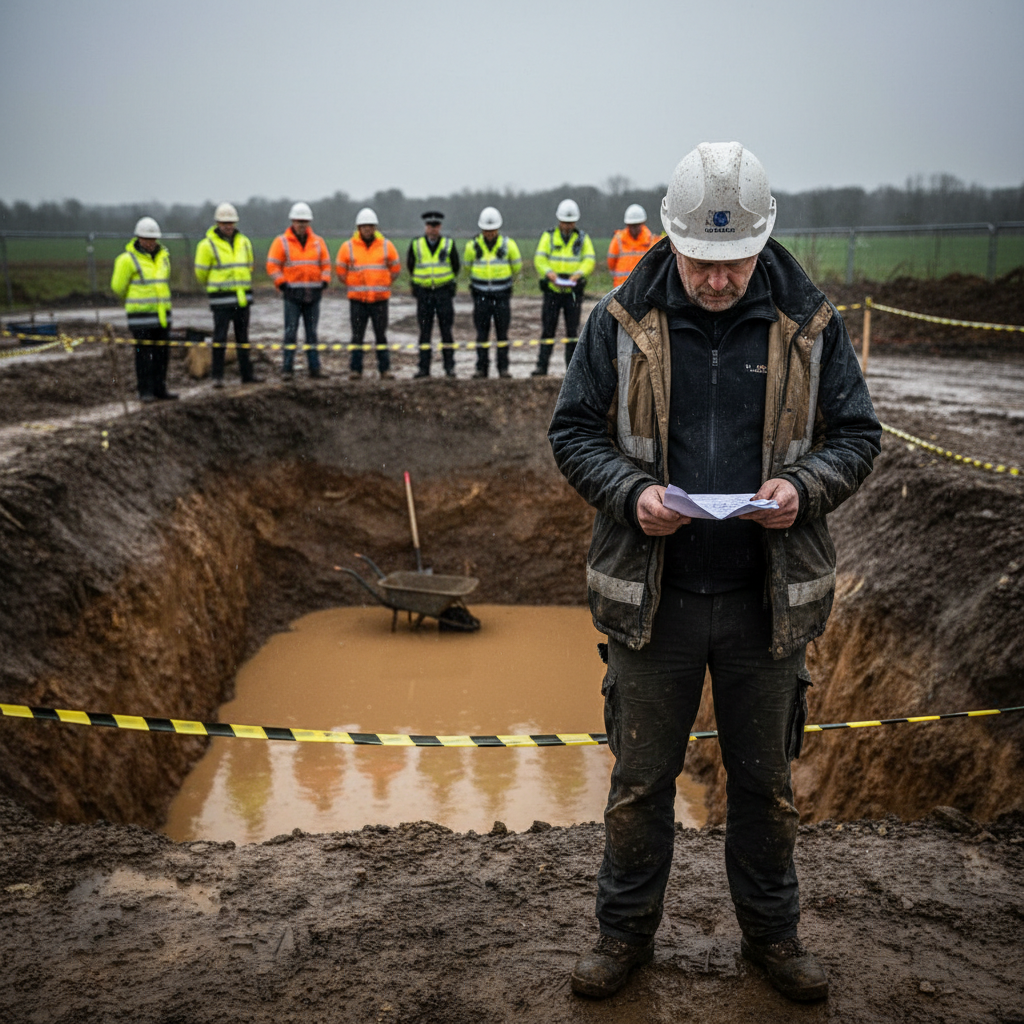
A construction company has been fined £20,000 after a 35-year-old labourer drowned in a water-filled excavation on a Hertfordshire building site. Mykhalio Hustei fell into an exposed foundation trench while returning to his on-site accommodation in Bovingdon on 22 October 2021. Alchemist DB Limited, which acted as the principal contractor for the flats development, was sentenced in its absence at Luton Magistrates Court on 29 May 2026. The firm pleaded guilty to breaching Regulation 22(2) of the Construction (Design and Management) Regulations 2015 and was also ordered to pay £5,000 in costs.
Background
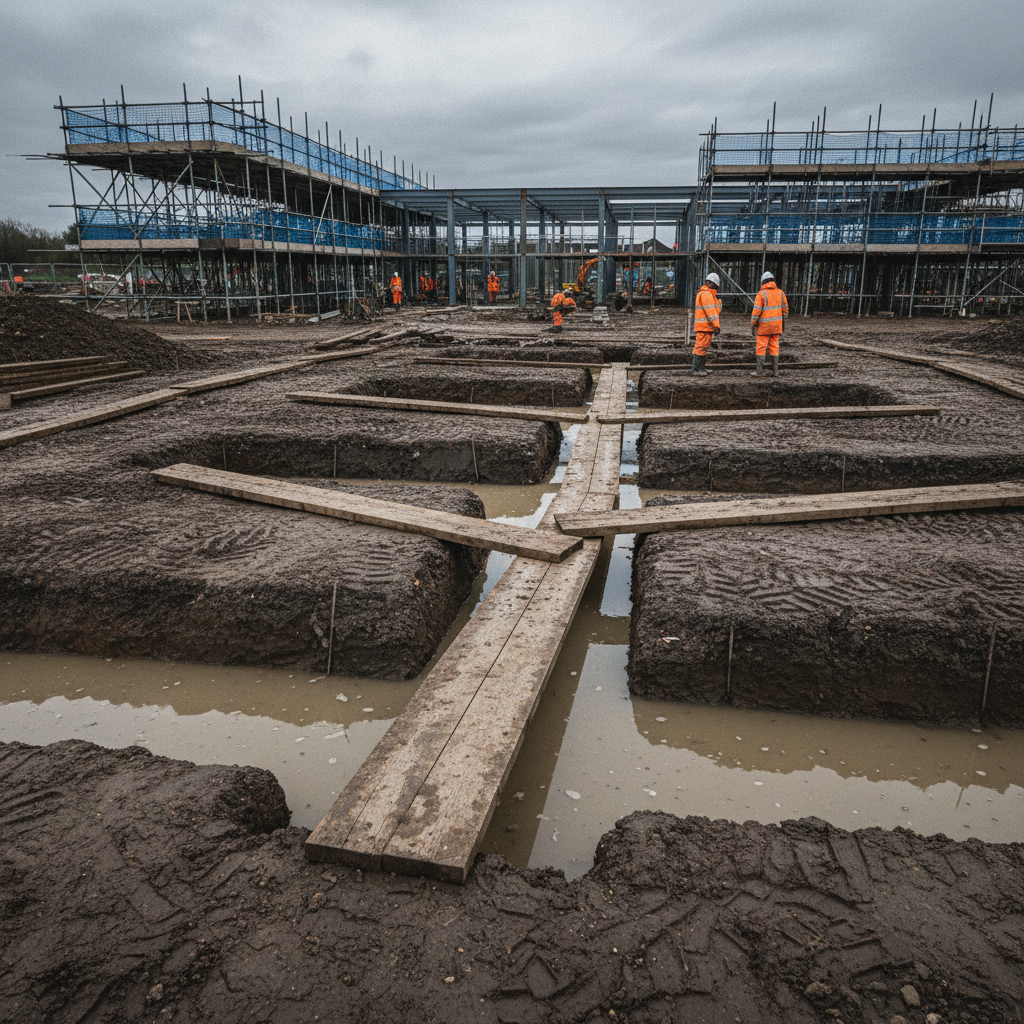
The Health and Safety Executive (HSE) investigated the incident and found that new foundation excavations crisscrossed the project footprint without any designated safe walkways. The contractor had placed large, unsecured boards across the trenches to act as temporary bridges. These boards were slippery, bowed under human weight and lacked handrails. Rainwater had filled the unprotected trenches, and the site had no dedicated lighting. It was only after HSE inspectors intervened following the fatality that the company installed proper scaffold walkways to prevent falls. HSE inspector Rauf Ahmed noted that the site was quite literally a death trap, describing the subsequent safety upgrades as a crude reminder of what should have been done originally. The firm has since entered liquidation.
Industry implications
This prosecution highlights the severe legal and human consequences of neglecting basic site security and excavation controls. Principal contractors hold a strict statutory duty to prevent falls into excavations under CDM 2015. When a firm fails to implement physical barriers or secure bridging, the corporate entity remains liable for fatal accidents, even if the victim is off duty or returning to temporary site accommodation. Liquidation does not protect a company from criminal prosecution or the associated public record of a major safety failing.
What contractors should do now
Site managers must immediately review all open excavations. No work should proceed unless trenches are physically secure, well-lit, and protected by substantial barriers. Any temporary crossing must be engineered for load-bearing capacity, secured in place, and fitted with rigid handrails. Contractors must also separate pedestrian routes from hazardous groundworks, especially if workers live in adjacent properties. Daily site inspections should specifically verify that rain or bad weather has not compromised the stability or slip resistance of access routes.
Expert view
Enforcement patterns show that HSE inspectors have zero tolerance for missing edge protection around groundwork. The fine of £20,000 reflects the company's financial status at the time of sentencing, but the finding of criminal negligence is absolute. Small and medium-sized developers often face severe penalties when relying on unapproved access arrangements like loose timber boards. The total failure to anticipate weather conditions or nighttime access requirements directly contributed to this fatality.
What happens next
The HSE will continue to target groundworks and temporary access arrangements during unannounced site inspections. Directors of liquidated companies involved in fatal accidents can sometimes face further scrutiny from the Insolvency Service if corporate negligence is proven. Contractors should expect increased regulatory focus on out-of-hours site security where workers are housed within the project boundary.