By James Whitaker · Published 13 June 2026 · 3 min read
Two construction companies have been fined a combined £79,300 after a 26-year-old scaffolder fell six metres through a fragile skylight, sustaining severe injuries. James Cranswick suffered a broken arm, a broken leg and head lacerations during the incident at Acre Mills in Keighley, West Yorkshire. CCTV footage captured him falling onto a pallet truck before hitting the concrete floor. The Health and Safety Executive prosecuted both the principal contractor and the subcontractor for failing to plan and monitor the work. The fines were handed down at Leeds Magistrates Court on 4 June 2026.
Background
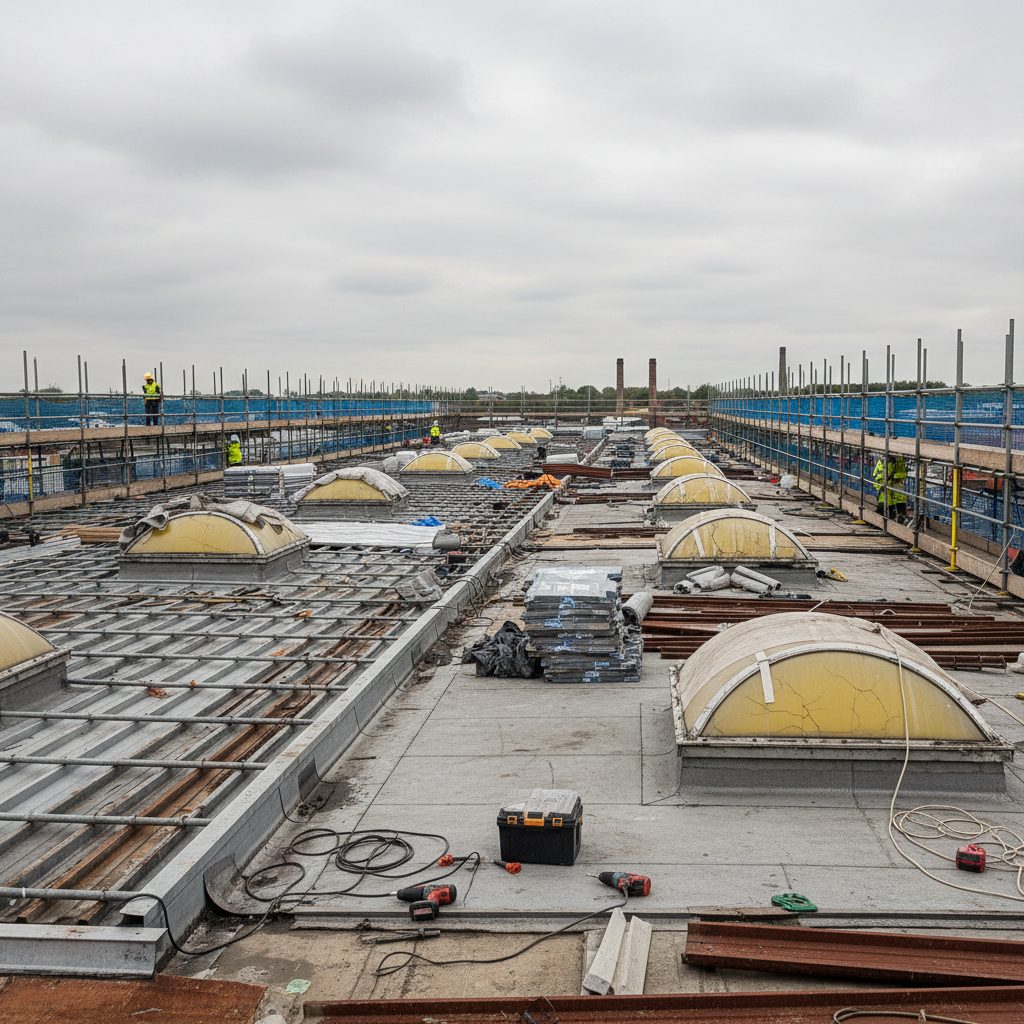
The incident occurred while Mr Cranswick was installing temporary scaffolding edge protection for Clover Access Systems Ltd. He stepped on an almost invisible skylight while carrying materials across the warehouse roof. An investigation by the Health and Safety Executive found that neither Clover Access Systems nor principal contractor STM360 Ltd had implemented measures to prevent falls from the roof edge or through fragile elements.
Clover Access Systems pleaded guilty to breaching Regulation 15 of the Construction (Design and Management) Regulations 2015. The firm, which is now in liquidation, was fined £26,000 and ordered to pay £2,866 in costs. STM360 pleaded guilty to breaching Regulation 13 of the same legislation. They received a £53,300 fine alongside £3,167 in costs.
Industry implications
This prosecution reinforces the joint liability shared by principal contractors and subcontractors under CDM 2015. The Health and Safety Executive holds both parties accountable when work at height is not properly supervised. The fact that Clover Access Systems is now in liquidation did not prevent the court from imposing a substantial financial penalty. Furthermore, the £53,300 fine for STM360 highlights the heavy cost of failing to manage subcontractors effectively.
What contractors should do now
Firms must review their work at height protocols immediately. Before any roof work begins, contractors need to identify all fragile surfaces and avoid the need for access to them where possible. If access is unavoidable, perimeter edge protection and fall arrest systems must be installed. Site managers must ensure that all workers are fully briefed on the location of fragile roof lights, which can often blend in with surrounding materials due to weathering or poor lighting.
Expert view
Falls from height remain the leading cause of fatal and serious injuries in the UK construction sector. This case is notable for the use of CCTV footage, which provided undeniable evidence of the fall and the lack of safety measures. HSE inspector Shauna Halstead noted that Mr Cranswick is lucky to be alive. "His fall was wholly avoidable. The risks associated with work on, or around fragile surfaces are well known, and HSE guidance is available to assist companies in complying with the law," she said.
What happens next
The Health and Safety Executive continues to target poor work at height practices through unannounced site inspections. Contractors operating in the commercial refurbishment and roofing sectors should expect increased scrutiny of their risk assessments and method statements. Companies failing to provide adequate fall protection face immediate prohibition notices and subsequent prosecution.
Sources