By Sarah Donnelly · Published 14 June 2026 · 4 min read
The Building Safety Regulator has issued a formal stop notice on a 28-storey residential development in Manchester, halting all structural work with immediate effect. The enforcement action occurred on 12 June 2026 after inspectors discovered the principal contractor had altered the approved fire compartmentation strategy without submitting a major change application. This intervention represents a landmark use of the powers granted under the Building Safety Act 2022 and marks one of the most significant regulatory interventions since Gateway 2 requirements became fully operational across the sector.
Background
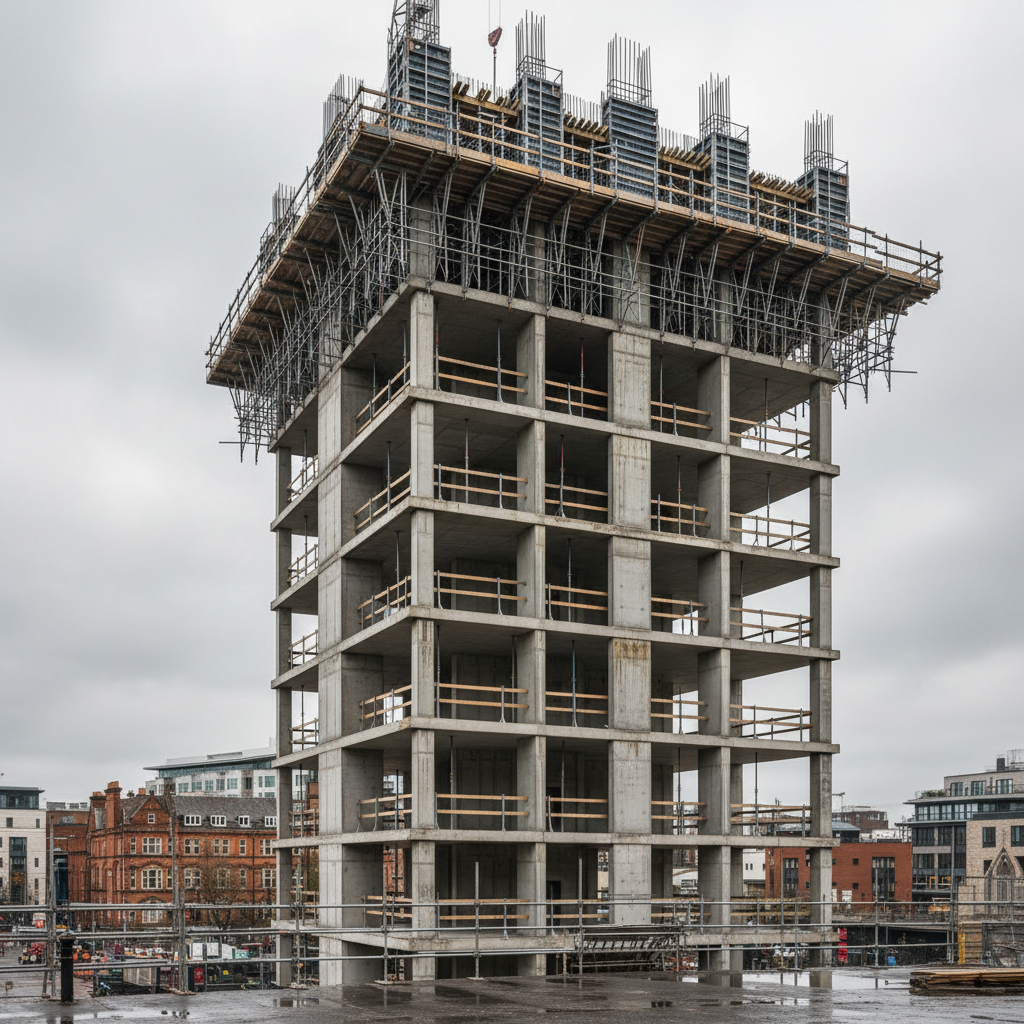
Under the Building Safety Act 2022, any major deviation from the approved design of a higher-risk building requires a mandatory six-week review period by the Building Safety Regulator. Higher-risk buildings are defined as structures at least 18 metres or seven storeys in height containing at least two residential units. The site in central Manchester, currently at the structural framing stage, was inspected during a scheduled, unannounced regulatory visit. The regulator confirmed that the contractor substituted specified intumescent fire-stopping materials for a cheaper alternative product. The principal contractor failed to log this as a major change or seek approval from the principal designer before authorising the installation. According to the Health and Safety Executive, this constitutes a direct breach of the mandatory change control process. An agency spokesperson stated: "The change control process is not optional. Substituting critical fire safety products without regulatory approval compromises the entire safety case of a high-rise structure."
Industry implications
This stop notice demonstrates that unauthorised value engineering on higher-risk buildings will trigger immediate site shutdowns. The financial impact for the principal contractor is severe. Prolonged delays caused by a stop notice can cost upwards of £75,000 per week in liquidated damages, site overheads, crane hire and idle labour. The regulator is clearly signalling that commercial pressures and material shortages cannot override statutory compliance. Furthermore, subcontractors on the Manchester project have been stood down. This disrupts the wider supply chain and creates complex contractual disputes over who bears the liability for the delay. The action serves as a warning that the regulator will not hesitate to use Section 35B of the Building Act 1984 to enforce compliance.
What contractors should do now
Principal contractors must strictly enforce their change control logs and educate their procurement teams. Any proposed substitution of fire-critical materials, structural components or escape route dimensions must be flagged immediately. Site managers must halt the installation of any alternative products until the principal designer formally assesses whether the alteration is classified as a notifiable change or a major change. Subcontractor agreements and supply chain contracts must be updated to penalise suppliers who deviate from the Gateway 2 approved specification without written, multi-party authorisation. Site teams should also conduct weekly compliance audits to verify that the materials delivered match the approved safety case exactly.
Analysis
The regulator is using this £45 million project to send a clear message to the wider industry. Early policy warnings from the Building Safety Regulator indicated a zero-tolerance approach to unapproved design variations, but some developers assumed enforcement would be slow. This action proves the authority has the resources, the technical expertise and the mandate to police active high-rise sites aggressively. The substitution of fire-stopping materials remains a critical risk area. Prior to the Grenfell tragedy, contractors frequently swapped products based on availability or cost. The new regime essentially criminalises this practice if it bypasses regulatory scrutiny. By acting swiftly, the regulator ensures that the golden thread of building information remains intact and accurate.
What happens next
The site remains closed while the Building Safety Regulator reviews a retrospective change application submitted by the client. This statutory review period could take up to six weeks, during which no further structural progress is permitted. The regulator has indicated that further criminal prosecution could follow if the ongoing investigation finds the breach was an intentional effort to cut costs. The principal contractor has been ordered to submit a revised construction control plan by 26 June 2026. Industry bodies expect a surge in compliance checks on active higher-risk building sites across the North West over the coming month.