By James Whitaker · Published 28 May 2026 · 3 min read
A Liverpool fencing contractor has been fined £10,000 after a worker suffered an electric shock and severe burns when striking a live underground cable on a Manchester site. City Fencing Contractors Limited pleaded guilty to breaching Regulation 25(4) of the Construction (Design and Management) Regulations 2015. The firm was sentenced at Warrington Magistrates Court on 26 May 2026, and ordered to pay an additional £5,487 in costs.
Background
The incident took place on 21 May 2024 at a construction site on Meade Hill Road in Manchester. Paul Taylor, a 59-year-old father of three, was part of a team installing security fencing at a synagogue. He was using a breaker to dig into the ground when he struck a live electrical cable.
The contact caused a significant electric shock. Taylor sustained multiple burn injuries to his stomach, chest and arms.
An investigation by the Health and Safety Executive (HSE) revealed that City Fencing Contractors Limited had failed to put suitable and sufficient controls in place to prevent the risk posed by underground services.
Industry implications
Cable strikes remain a major hazard during excavation and groundworks. HSE guidance clearly states that work liable to disturb underground services must not take place unless sufficient steps are taken to mitigate the risk.
Failing to conduct proper service checks exposes contractors to substantial legal jeopardy under CDM 2015 regulations. The financial penalties are considerable, but the operational consequences of severe injury or fatality on site are even greater.
In this case, the lack of an effective safe system of work directly resulted in life-threatening injuries to an employee.
What contractors should do now
Contractors must ensure underground cables are located, identified and clearly marked before any digging starts. Site managers need to obtain up-to-date service plans from utility providers prior to breaking ground.
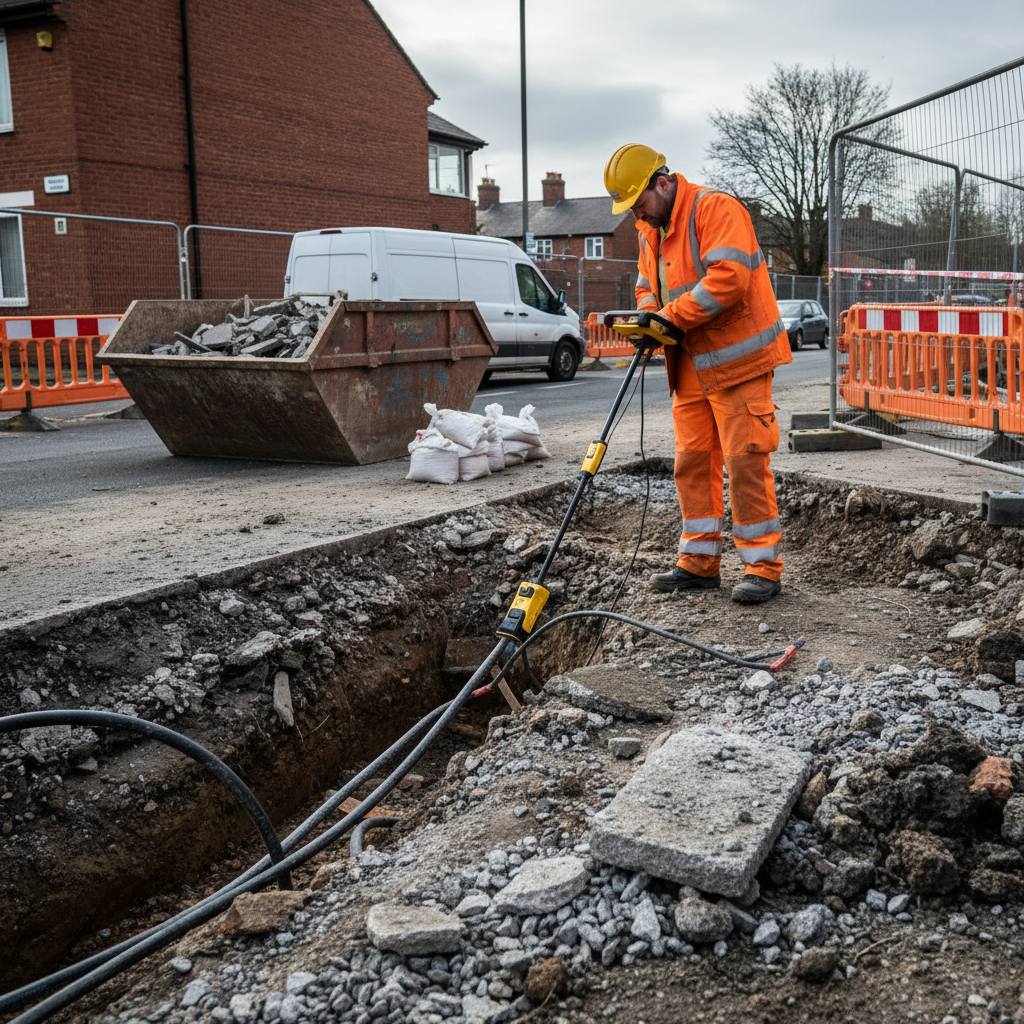
Firms should use cable avoidance tools (CAT) and signal generators (Genny) to scan excavation areas. Workers operating these devices must hold current competence training.
Excavation work must follow recognised safe digging practices. This includes careful hand digging near suspected services rather than relying on mechanical breakers or excavators.
Analysis
HSE inspector John Padfield stated that underground services are widespread and represent a significant risk. He noted that the incident could have been fatal and would have been entirely avoidable had the company followed standard HSE guidance.
This prosecution reinforces a consistent enforcement pattern. The HSE will pursue firms that fail to implement basic groundworks checks. Fines are calculated based on the risk of harm, not just the actual injury sustained. The £10,000 fine for a small contractor reflects the high culpability associated with ignoring established safe digging protocols.
What happens next
The HSE is actively targeting poor excavation practices during routine site inspections. Contractors operating in urban environments should expect intense scrutiny of their service identification procedures.
Firms have 28 days to pay court-imposed fines. Companies failing to review their digging policies following this case risk similar enforcement action.
Sources
- HSE Media Centre — Health and Safety Executive