By Sarah Donnelly · Published 10 June 2026 · 3 min read
Building Safety Regulator Approves 75% of Gateway 2 Applications in Last 12 Weeks
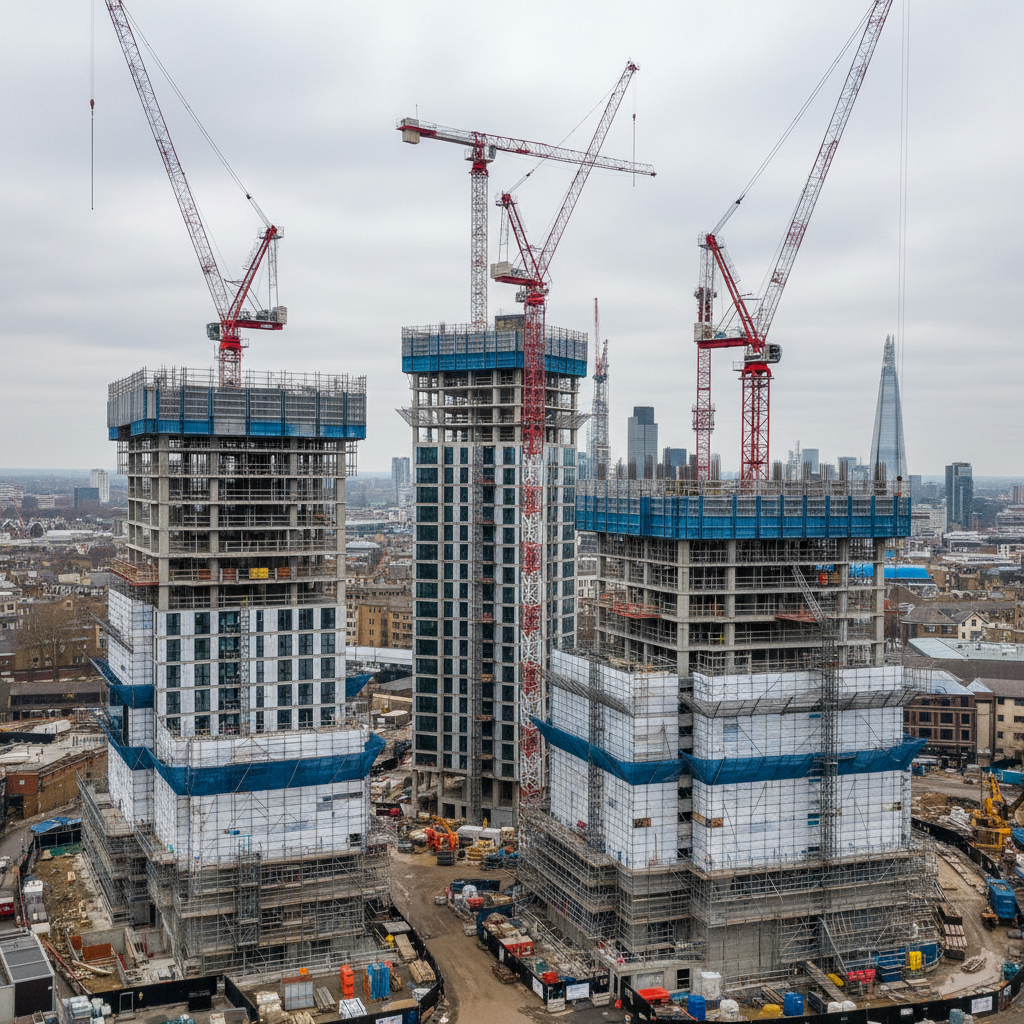
The Building Safety Regulator has approved 75% of all Gateway 2 applications in the 12 weeks leading up to 30 May 2026, signalling a significant acceleration in processing times. Over this period, the regulator determined applications covering 14,928 residential units, issuing approvals for 9,499 homes. This marks the first time since the introduction of the new regime that the regulator has determined more applications than it has received, effectively beginning to clear the heavily criticised backlog that had stalled high-rise development across the UK.
Background
The Building Safety Act 2022 fundamentally changed how high-risk residential buildings are designed and constructed. The Gateway 2 checkpoint prevents any construction work from beginning until the Building Safety Regulator has fully approved the technical design. Initially, the industry reported severe delays, with the House of Lords Industry and Regulators Committee previously noting that the regulator was taking significantly longer than the statutory 12-week target. In response, the regulator launched an External Remediation Improvement Plan in April 2026, introducing a batching process to accelerate assessments for both new builds and legacy remediation projects.
Industry implications
The newly released data suggests that the administrative bottleneck is finally easing. The specialist Innovation Unit, which handles complex new-build projects, recorded a 90% approval rate over the last 12 weeks, successfully processing 28 out of 31 decisions. For existing buildings, the remediation approval rate has risen to 79%, far exceeding the minimum 65% target set for the end of 2026. Only 16 legacy remediation applications from 2024 remain outstanding, down from 42 at the start of the year. This increased throughput provides developers and principal contractors with much greater certainty regarding project start dates and supply chain scheduling.
What contractors should do now
Despite the improved processing times, contractors must not reduce the quality of their submissions. The Building Safety Regulator still rejects one in four applications. Design teams must ensure that their Gateway 2 submissions contain fully complete technical designs, including construction-ready drawings, structural calculations, and a clear Golden Thread of information. Any attempt to submit incomplete designs as placeholders will result in outright rejection and further project delays. Contractors should also factor the statutory 12-week review period into their pre-construction programmes as a strict minimum.
Expert view
Acting chief executive Charlie Pugsley stated that the regulator is working closely with applicants to safely resolve complex technical challenges. The high approval rate within the Innovation Unit proves that early engagement between design teams and the regulator yields positive results. The shift towards a manufacturing mindset, where all design is finalised and checked before ground is broken, is now deeply embedded in the high-rise sector. Developers who have adapted to this front-loaded design process are now successfully passing through Gateway 2 without significant delays.
What happens next
The regulator expects to clear the remaining 2024 legacy applications by the end of June 2026. Focus will then shift fully to processing the 38,775 live case units currently in the system. As the regulator increases its assessment capacity, the industry anticipates further guidance on Gateway 3 applications, which will govern the final completion certificates required before residents can occupy new high-risk buildings.
Sources
- Tall Buildings Media — Tall Buildings Media